Sensitive observation of the child in order to understand their needs
“A central concept in RIE is that we use sensitive observation in order to understand the child. Observation is a human default mode. It’s part of our survival system. But when we’re talking about understanding children, we have to tune our attention a little bit differently. When a child needs some help from us, we use what we have as our first impulse to try to intervene on their behalf. And sometimes that doesn’t work. And so when our first instinct doesn’t work, we step back a little bit and we start consciously observing to see what might be needed. We pay attention in a more focused way to the cues the child is putting out to the clues in their communication. The goal of sensitive observation is to increase our attunement with the child, to give the child the genuine sense of being understood, and when the child feels understood, then there’s more likelihood that we’re going to be operating in harmonious ways with the child. So the purpose of sensitive observation is improved communication and more well-targeted interventions.”
Involvement of the child in all caregiving activities to allow the child to become an active participant rather than a passive recipient
“In the RIE approach, we encourage adults to allow children to be active participants rather than passive recipients in all the caregiving activities. You’d be surprised how quickly an infant can begin to understand your requests. You think it’s silly to talk to babies because they don’t speak, right? You think they can’t understand you, but they actually are learning from early on, and even a very young baby can lift a leg or put a leg down in helping with a diaper change. They’ll even kick their leg through their pants when you ask them. The main thing is to remember how important it is to slow down. They don’t process our requests at the same speed that an adult does. If we slow down, they can keep up and they can become really involved, and this gives them a very strong sense of their own ability to be part of every event that concerns them.”
An environment for the child that is physically safe, cognitively challenging, and emotionally nurturing
“Place is important for young children just like it is for adults. What we want to do is to try to create a cognitively challenging, physically safe and emotionally nurturing environment in which they can be the explorers, the small pioneers that they really are. Think about what explorers do, right? They scan the environment for what’s out there, what’s here for me, what can I do with it? They check for safety. Is it safe here? Is there danger around the corner? So children are testing their environment just the same way an explorer does when they’re out in the wilderness.
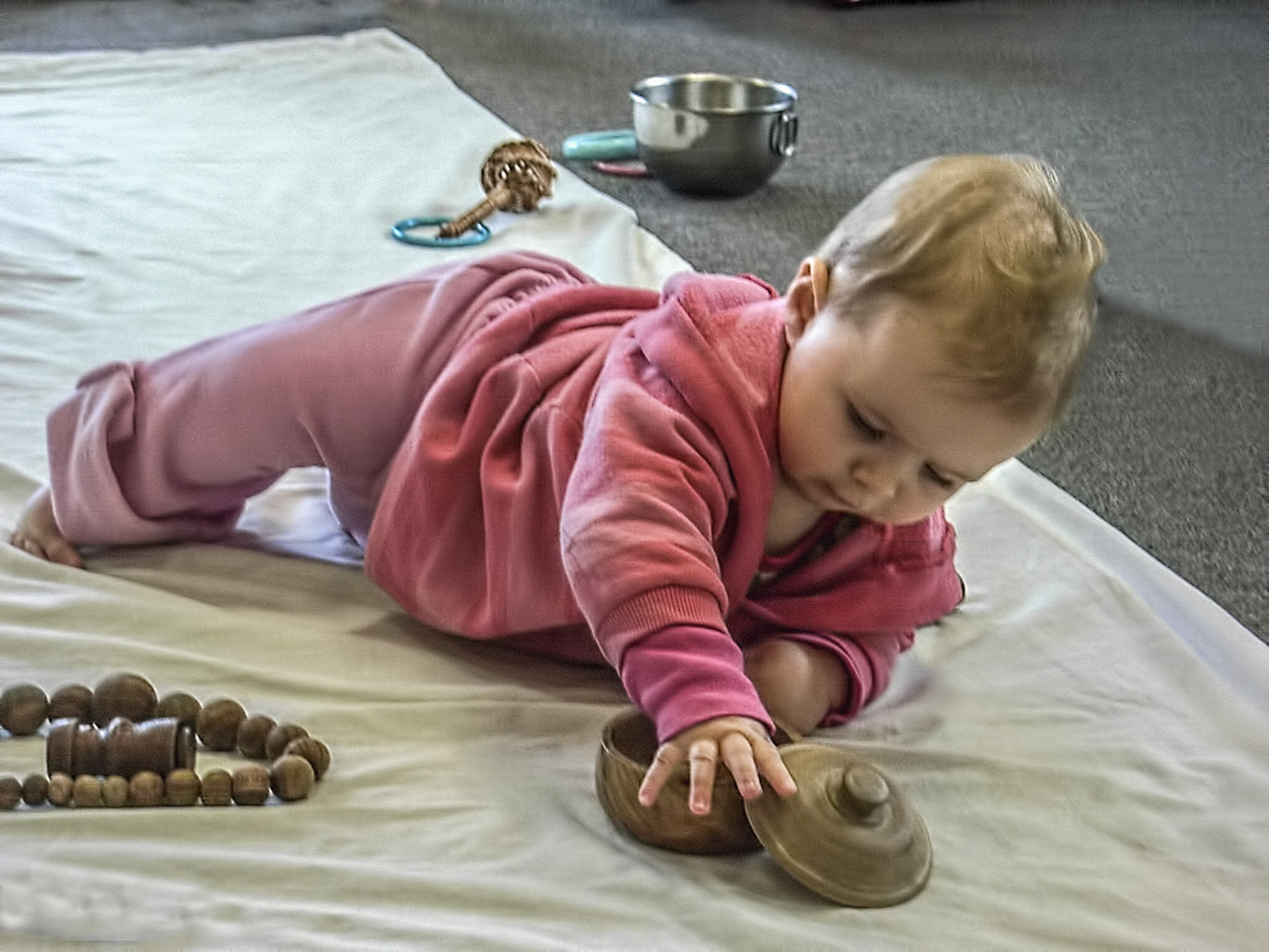
Usually the environments we see infants and toddlers in are manmade or human made environments, and everybody wants to provide children with the optimal learning environment, right? Parents want to provide that for their children. Oftentimes, the most guidance they get is from toy manufacturers, but there’s another way to do these things. And in RIE, we offer children a variety of actually quite simple everyday objects that they can explore in many different ways. We don’t want to offer them things that have only one kind of use or that have hidden mechanisms in them that are run by batteries. We take things from the kitchen. A small metal bowl will offer children many hours of play that they might not get from a busy box. A simple cloth napkin may give them the chance to learn peekaboo, and then later on, it can become a doll blanket or a washcloth or whatever they imagine it to be.
So it’s very simple. A big jug of water that has the lid glued on can give them so many opportunities to test their balance and figure out how do I keep standing up while I’m holding onto something really heavy? So it’s actually fun to explore your own house and figure out what things that children can safely play with. But thinking of the social environment, it’s really a fact that our attitude is what sets the tone of the environment for the child. What is it that the air has in it? What – is it the air of freedom? Or is it the air of – I better be careful. Somebody’s going to tell me no. I don’t know if I’m allowed to do this. So creating a space in which children feel an expansive sense of themselves and what’s possible is what we want to do.”
We give the infant plenty of time for uninterrupted play
“One of the most important RIE principles is the idea of giving children time for uninterrupted play. We all have this very well-meaning desire to be as helpful to infants as we possibly can, but if we help too much, then they don’t get the joy and excitement of discovery. Swiss psychologist Jean Piaget was famous for saying, “whenever you teach a child something, you forever destroy her opportunity to discover it for herself.” So we want them to have those moments of, “I did this! I discovered this!” It’s out there, and giving them lots of time to fiddle around and kind of be doing nothing, from an adult point of view. You may think they’re doing nothing, but they’re having an internal experience possibly? They may be following a train of thought that we don’t have any idea what it is they’re considering, but they do think about what they’re doing while they’re doing it, even though they can’t talk necessarily. And if we interrupt, we may be interfering with some important concept that they’re working through. Just imagine if you were writing an email to a work colleague and you were trying to word it just right, and somebody came up and just started talking to you at random while you were really thinking, what word is the best word to use here? It would be an intrusion, right? You would not appreciate that, and it’s okay to talk to babies when they’re playing. If they look at you and ask for a comment, that’s one thing, but to interrupt without an invitation is not the same. So observing them while they play and letting them know how much we value what they’re doing by allowing them to do it in a peaceful, unhurried way, that’s how we can really help them.”
Basic trust in the child to be an initiator, an explorer, and a self-learner
“On the subject of trust, there’s much to say. In RIE, we say we should trust infants to be initiators, explorers, and self-learners, which is a little different than the traditional idea of basic trust. Babies are learning to trust parents, trust themselves, trust the world. But what Magda Gerber taught is that we need to also trust them, that it’s a bi-directional relationship of trust. And there’s trust coming from the adult to the child, just as we hope there will be trust from the child to the adult. The child needs to have faith that when they’re in discomfort, when they’re hungry, when they’re upset, that a grownup will come and be with them and comfort them. And then the adult needs to learn that the child actually has many, many inborn capacities. And what RIE teaches is that that self-initiation is what we come to trust. So if we think that babies are empty vessels that need somebody to pour a lot of knowledge into them, then we’re going to think that we are in charge of what they’re learning. But in fact, they come into the world actively seeking experiences and information and all kinds of joyful times and learning to problem solve and learning to fill their own time in a meaningful way. We don’t have to spend all of our energy making sure that, oh, they’ve got their letters, they’ve got their numbers, they’ve got their colors, their shapes, because they absorb those things so organically as they’re exploring. The father of affective neuroscience Jaak Panksepp discovered there are basic genetically passed-on systems in the brain that cause humans to instinctually seek out what’s in the environment. He also discovered that there are brain parts dedicated to play. And so trusting infants to find experiences and find knowledge, it is not just an idea. It’s built into human nature to go and do that. And babies come into the world, human, fully human. They may not be fully mature humans, but they have what it takes to go out in the world and find what they’re looking for.”
Freedom to explore and interact with other infants
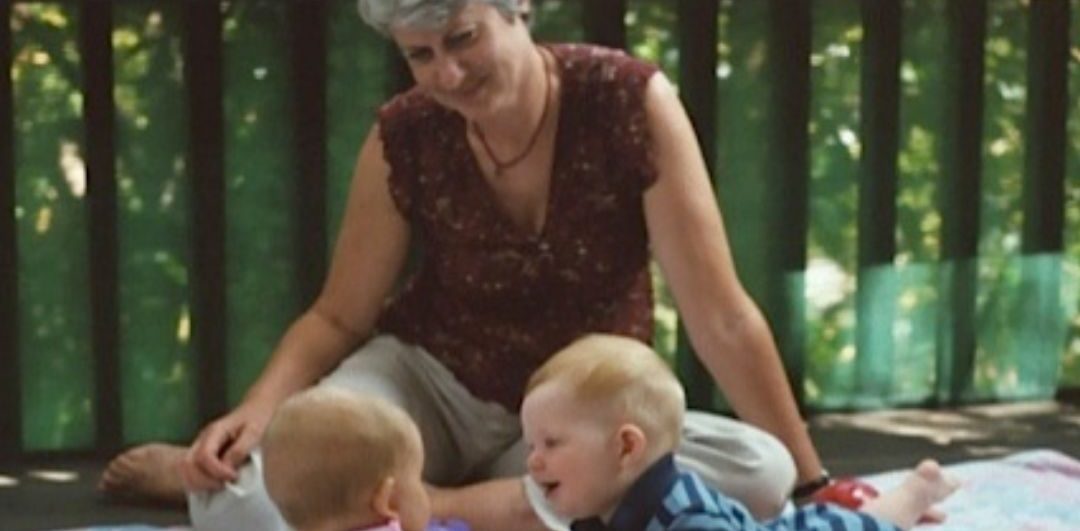
“The freedom to explore and interact with other infants is something that we cherish at RIE. It’s surprising how much they really enjoy being together. It starts off – they just gaze at one another and then you might see a smile, and then they reach out and they touch and it’s just magical. And sometimes they make mistakes. Little babies might be interested in the other child’s eyes and maybe start to poke a finger, and so it’s important to be there to intervene if necessary, but you don’t want to give them the idea that there’s anything wrong with wanting to touch and interact with the other child because that is so central to their humanity. Getting in touch with the other person in that way, that brings on curiosity and interest and wonder. We want to support that, and that’s what we do at RIE. There was a brand new class of infants at the stage of crawling, and they had not been with other infants ever before, and you could tell that they were so amazed that there were other people their size! And I’ll never forget Theodore crawling up to Georgia and kissing her, and she went back for a second kiss. Being together is important for adults, but it’s also really important for even babies.”
Consistency and clearly defined limits and expectations to develop discipline
“Sometimes people get the impression that RIE children are allowed to do whatever they want, all the time because we let them play freely – but this is not the truth.
Parents and caregivers need to provide consistent expectations and limits for children in order for them to be able to know what to expect in their day. And we offer them the security of being able to anticipate what is expected of them.
So even if a child needs to test – which of course they need to do because that’s in their genetic makeup, is to try things out — we don’t want to shame them for their desire to try, but we just stop the behavior – for instance if a child is very disappointed that there aren’t strawberries at lunch, but only apples, they may decide they’re going to throw their milk on the ground in protest, and we can sympathize with their sad feelings of not having strawberries, while at the same time stopping the behavior in a firm but kind and calm manner.”
I have a confession to make…I am a recovering Professional Worrier.
Professional? Yes. I know, as I unknowingly made it into a career.
I might just be among the best. You see, I started my apprenticeship when I was very young. By the time I was five years old, my family had given me the affectionate name of “worry wart,” not something that most of us aspire to have as our moniker.
As I grew up, I tried hard to be well prepared in case anything went awry. I worried about everything and everyone. I could and would worry here, there, and everywhere in between.
As a parent and a caregiver, I worried a lot. Do the infants in my care have what they need? Could I do more? Have I planned enough?
The continual worrying was exhausting, but I was really good at it.
What does this have to do with the Educaring® Approach?
Just about everything!
Magda Gerber addresses this topic in her book, Dear Parent: Caring for Infants with Respect. She understood that parenting is “the most difficult job for which you cannot really prepare yourself.” Can we make it easier? My answer is yes!
How?–“by not trying to do the impossible while missing the obvious.” She advises parents to “relax, observe, and enjoy what their babies are doing, noticing and enjoying new skills as they develop naturally.”
Magda shares that our role as parents and caregivers is “to provide a secure and predictable environment.” We are encouraged to “be sensitive to your infant’s changing needs; the infant has to feel your caring presence. But, you don’t have to teach. You don’t have to buy more gadgets. You and your infant can just exist and enjoy each other as your relationship develops.”
That last sentence sounded so peaceful and unlike any parenting or child development information I had ever encountered. “You and your infant can just exist and enjoy each other as your relationship develops.”
The Educaring® Approach invites each of us to become fully present and aware of our own attitudes, feelings, and perspectives.
I realized that my own unneeded concern could cause a knee-jerk reaction (versus a thoughtful response) and leave out the opportunity for me to carefully observe and read the baby’s cues. Maybe this is what Magda meant about “not trying to do the impossible while missing the obvious?”
Striving to be more mindful has helped me find a natural rhythm with each baby, and our relationships have deepened as a result. As I learned to move slowly and observe, I watched the children experience pure joy and a true sense of accomplishment from their movement and play. I witnessed the development of persistence, self-determination, and resilience; lifelong gifts they could carry with them.
What can you do if you find yourself getting anxious and worrying? Ellen Galinsky, author of Mind in the Making: Seven Essential Life Skills Every Child Needs, has a suggestion. She developed a mantra, “Worry doesn’t work.” By saying it aloud and asking herself, “Okay, so what can I do instead?” —she gives herself time to slow down, reflect, problem solve, and thoughtfully proceed.
And so, I wish for you the chance to let go of the burden of unnecessary worry. Try to set it aside for the children in your care and for yourself. Why? Because “worry doesn’t work” and life is pretty amazing when we are willing to be in the moment.
If you begin to struggle, it’s okay. You are human. You are invited to try again.
So, you’re having another baby! Congratulations! Now, don’t panic. How do you prepare your firstborn?
I will cover some essentials which include how to respond compassionately and confidently to your firstborn’s challenges.
One of the first images that comes to my mind is that of parents excitedly telling their firstborn that he’s going to have a sibling. How exciting! Some common phrases used are: “You’re going to be such a wonderful big brother.” “You’re going to love your little sister;” “How lucky your baby brother is to have a big sister like you;” “You’re going to be such good friends;” “You’re going to have someone to play with.” It’s natural to paint a rosy picture, hoping our firstborn will behave according to these expectations and adore his new sibling. But, sibling relationships, like all meaningful relationships, take time to grow. It is important to prepare our firstborn for the realities of a sibling. “Mommy and Daddy will be very tired.” “Baby will need Mommy’s (and Daddy’s) attention a lot just like you did when you were tiny.” “You can be a big help.”
Expect more love. Expect more joy, work, frustration, anxiety and fatigue. It’s another part of life and it’s worth it!
Over the years, many parents have reported an easy, loving and affectionate transition. Sometimes there is little “acting out” on the part of the firstborn. But, be ready for anything. Here are just a few responses of firstborns that parents have shared with me over the years: “Can we keep IT in the backyard?” “Can we throw it in the garbage?” “Put it back.” “Let’s give him away.” “I don’t like him.” “I hate him.” “I love her .” “Put her down.” “Don’t hold her!” “Do we have to keep him?” “Can we get a dog instead?” “Can I sleep in the same bed with her?” “I want to play with her.” “I want to hold her.” The list goes on and on.
These are actually age-appropriate responses. If we focus too much on our firstborn’s outer behavior, we might lose sight of his internal motivating feelings. It is essential to keep your fingers on the pulse of your older child’s world. Understand that the birth of a sibling is a huge and often traumatic event and how you interact with him can set the stage for years to come. Your firstborn should feel safe to express himself. Even though he knows that he’s expected to be gentle, at times he might not have the impulse control as his emotions will vary from hour to hour. As tired as new parents are, it is important to observe and to set safe boundaries for your firstborn, physically and emotionally – boundaries enforced with predictability – combined with kindness and firmness. He needs to be listened to and not shamed. This is a time for parents to avoid admonitions such as, “That’s not nice.” “I don’t want you to say things like that.” “That’s mean.” “Don’t talk that way.” “You’re going to love her.” “I know you really love him.” “Grow up!” (That one really gets me.) “You’re a big girl now.” If you express disapproval, you’re sending the message that it’s not OK to have feelings that aren’t “nice.” But your toddler DOES have these very big feelings and it’s normal. He needs his parents and trusted caregivers to help him safely process and navigate these feelings – to make sense of them and to self-regulate. This is the time to reinforce the foundation of trust that you’re building which supports authentic communication and respectful attachment. Our children can process and make sense of most situations as long as we validate their reality. It is the denial of reality that creates crazy-making, anger, self-doubt and causes repression of feelings.
Try to avoid overly praising your toddler with “good job,” or by giving some kind of reward every time he expresses positive feelings toward his sibling. Otherwise, you might get the desired behavior, but it would be outer-directed with approval as the goal instead of motivated by intrinsic satisfaction. It’s fine to honestly express your happiness that he loves his baby sister, but I suggest keeping your responses low-key and authentic. If and when he is angry and jealous, be his steadfast advocate by acknowledging the reality of those feelings and helping him find a safe outlet. Understand that it’s hard learning how to deal with all these big feelings but even so, baby sister must always be treated gently. As you acknowledge his feelings, use understandable, age-appropriate words with the knowledge that this new situation is difficult for him. Some authentic responses might be: “I see this is hard for you.” “You had all my attention and it must be hard to have to share me with your brother.” “Thank you for telling me. You have a lot of big feelings.” “I hope one day you’ll feel differently but let’s figure out what we can do to help you now.” “I’m so tired and I really want to spend some special time with you and without baby.” Help him find a place to safely redirect feelings within secure and predictable boundaries. Do not distract. While correcting and disciplining, remember that discipline should be instructive and never punitive.
In conclusion, please be kind and forgiving not only to your child, but also to yourselves. If you were perfect parents, you would be impossible role models for your children to live up to. You’re going to make mistakes and that’s OK. How you deal with your mistakes is how your children will deal with theirs. Try your best and acknowledge your successes and your mistakes. I wish you and your expanding family all the happiness and joy that comes with the challenges of the future. It’s a worthwhile and wonderful journey.
Wendy Kronick is a RIE Associate facilitating classes at the RIE Center Hollywood.
What does this mean for parents and caregivers of infants?
I’ll begin with the caveat that I don’t know that this is a direct quotation from Magda Gerber. Like many brilliant historical figures, we sometimes attribute meaningful quotations to people we honor and admire, even if they didn’t say them. However, I will say that it is a very apt description, indeed, of her Educaring® Approach. This statement begs the question: how do you wish to proceed in your relationships with children? I feel like this question is asking me to take the long view…a lifetime: What is my vision for children over the course of their lifetimes? What is yours? Take a moment now and think about it.
My vision is to be in relationship with children and for them to grow into content and successful adults. I want to know who they are, and I want for them to know who THEY are.
It’s a simple wish, but not an easy one.
And yet, I’ve seen this vision unfold time and again. I’m fortunate enough to have been introduced to Magda’s work almost 20 years ago. I know teenagers and young adults who have grown up in families who practiced the Educaring Approach, and there is just something truly special about those individuals…they are teenagers you don’t mind being around!* There is a peace to them…poise, a solid presence….what they have is self-confidence. And I see that in every age and stage: teens, tweens, young school-aged children, preschoolers, and yes, infants and toddlers. Magda had it right: Your Self-Confident Baby, indeed!
*Parents of said teenagers always remind me that their brilliantly authentic teenagers can be just as authentically awful when in the privacy of their own homes…but hey, so can I! I mean, you have to let it all out someplace!
So, instilling that sense of self-confidence is how I wish to proceed. How do I begin?
By giving them the time and space to find it… In fact, not so much instilling self-confidence, as preserving it.
Magda asked us to start with the idea that infants arrive with individual and unique personalities and capabilities. Her Educaring Approach asks us to slow down and observe children…to look for that personality, those capacities…to invite them to participate whenever we engage with them…basically, to start in relationship with them.
The Educaring Approach starts with respect. That idea is so integral to the Approach that I remember, when I was first learning about RIE®, I thought surely it must stand for “Respect Infants Everywhere!”
At first blush, it may seem a strange verb to apply to infants. However, whenever I ask people to think about a respectful interaction they’ve had, universal themes always emerge: to be seen, to be heard, to have one’s point of view taken into consideration, to be trusted, to be spoken to in a meaningful way. It’s something we all want. As part of a mindfulness class I recently took, I heard that theme emerge again from no less than Oprah: All of us just want to be really seen…that I see you and I know that your being here matters. The human condition is that we all need to be heard. To be seen. To have our perspective acknowledged.
So, if we begin as we wish to proceed, we begin by seeing them and listening to them as infants.
(And I want to emphasize here, that it is never too late to start using the Educaring Approach. It is never too late to respect someone’s point of view and involve them!!)
The Educaring Approach helps us see that each child is unique, has a point of view, and is capable…it is our job to look for that point of view and to look for the abilities and to offer opportunities for them to demonstrate their capabilities and ever-growing competencies. Respecting infants opens a whole new world to us: rather than helpless, dependent creatures that need to be entertained, motivated, stimulated….we see curious, eager, thoughtful people…yes, people who depend on us for so much…but who also have startling capabilities when we take the time to look for them.
And that’s what we do in Parent-Infant Guidance™ classes each week…we practice observing them. And it is such a gift. Parents and caregivers watch as children encounter frustrations and solve problems, how they make connections, how they exist in a state of flow, moving from one object to the next, needing no guidance or direction…simply following their own interests. They are really in the process of what early childhood theorist Friedrich Froebel called “the language of things.”
To adults, this could seem boring. We already know what a metal ramekin feels like in our mouths, what items will fit inside of a 5 gallon water jug with a narrow mouth, that balls roll when you throw them and sometimes mason jar lids do, too, but stuffed kitties rarely do…we already are well-familiar with the way the light plays with objects to make shadows and that that beam of light moving across the ceiling is from a truck rumbling by. It’s tempting to want to jump in and teach or entertain, to show them that the balls can roll down the slide, that you can pop those funny egg shaped things together….but when you do that, you might miss them figuring out the kitty is just heavy enough to slide down that slide, and that moment of discovery when they figure out they can put those beads on every finger. Magda was fond of quoting Jean Piaget: “When you teach a child something, you forever take away his opportunity to learn it for himself.”
It’s tempting to help them with things that are easy for us…sure, you can open that jar with the toy inside or pull that big ball out from where it is wedged under the structure, but so can they…if they persevere a little. Frustration challenges us in big and small ways throughout life…sometimes even leading to leaps and growth, and sometimes just annoying us to tears… learning to mitigate frustration early in life is a gift. When you jump in to solve the problem every time, what you end up teaching is not how to open the jar or how to play with pop beads or balls…but instead you teach them to look outside of themselves when they encounter a frustration or problem. That they need someone else to entertain them or tell them what to do next. This is absolutely not to say they will never look to you for help or for guidance!! No not at all! But instead, to have that self-confidence to look within themselves first, is the goal.
Of course, this is not to say we should never teach children! There is absolutely time for teaching, but before you teach…slow down…pause…and see what they already know, what they can already do…and what they are teaching us…there’s beauty in the simplest things if we slow down and see with their eyes. For example, during lunch with a toddler, I recently discovered how spectacular garbanzo beans are…their funny little shape, with a crack down one side, and a tiny little point that you can just grasp with your fingernails…there’s a papery skin that pulls away, and they don’t squish, but rather crumble!
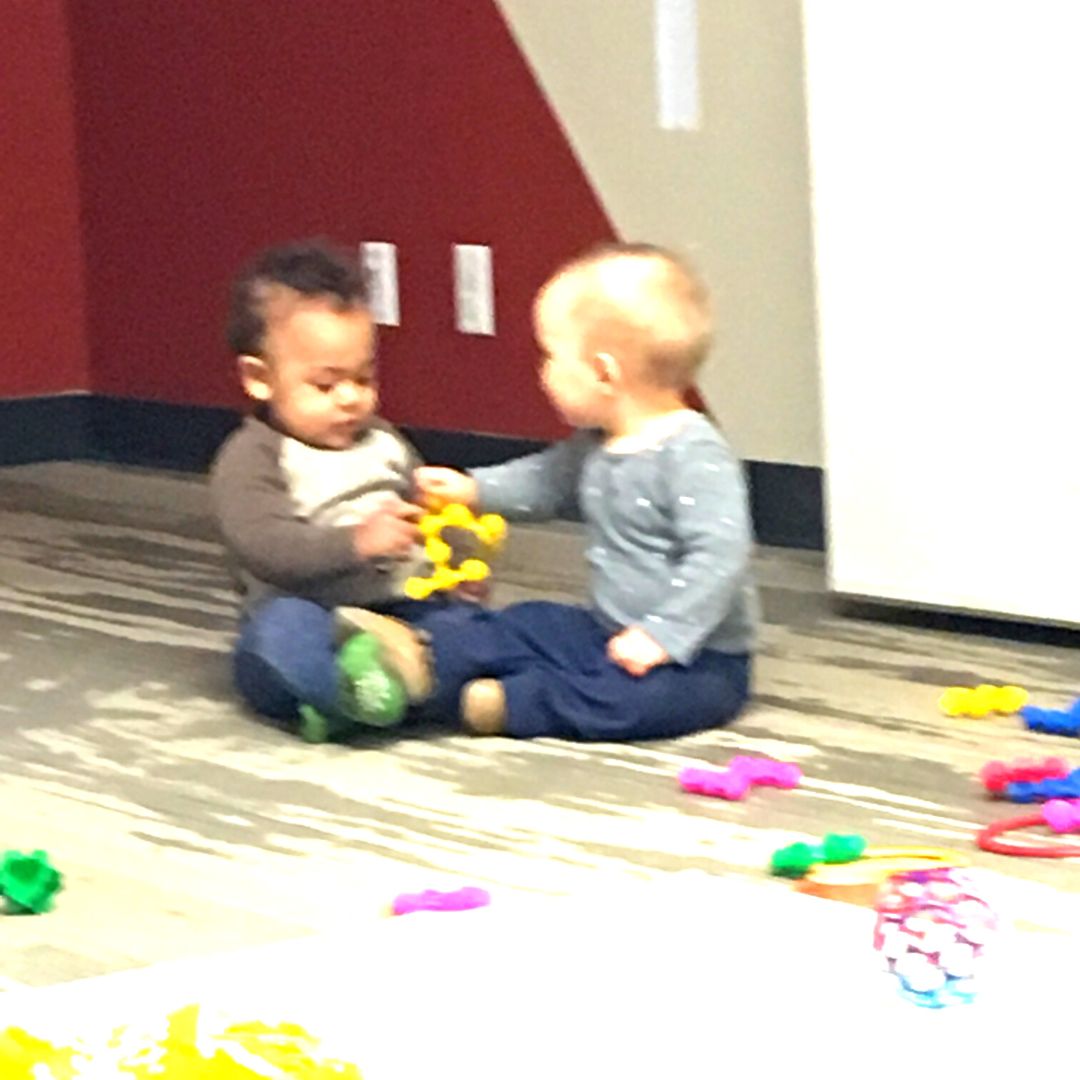
One of the things I love best to watch is how children learn to be with other children. That learning starts in earnest during those first moments when two infants can get close enough to touch, they want to explore each other’s faces and hands…and sometimes toes. While we have to keep them safe (those eyes are just SO tempting and the grasp is not quite refined…), also want to refrain from interfering too much…this is the first foray into the social world…their relationships with their peers.
Bring that careful observation and hesitation to interfere with you as they get a little older and start to pass toys back and forth and you’ll notice that for quite a while no one minds having a toy taken away, and in fact, it sometimes sparks a connection! Even when children do start to mind having a toy taken away, keeping children safe is still the only priority…this is when it is most critical to hold back with refereeing…this is when relationships are really developed. For infants and toddlers, learning how to be social, to be a part of this world, is all they are working on…not whether or not they get to hold onto the truck for a few more minutes. With our careful observation and reflection, we can let children learn to negotiate these moments on their own. When we refrain from solving squabbles over toys, we are giving children the tools to move through the social world confidently…knowing they can work things out with others, knowing you are there to support them, but also without having to go to you to solve it for them.
In all of the scenarios above, I put the spotlight on what children can do, on their amazing capabilities and capacity for growth and self-knowledge. It’s true that infants and toddlers are capable of so much if we allow them to try, if we give them the time, space, and opportunity…but there’s one more, critical element to this equation: attachment. None of that is possible outside the context of a caring and present relationship.
At the beginning of this discussion, I talked about slowing down, observing…and allowing them to participate whenever we engage them…and that’s the key. When do we most often engage with children? Over caregiving routines! Changing diapers and wiping noses and feeding and dressing and applying sunscreen and changing diapers and wiping sticky fingers and bathing and brushing hair and clipping fingernails, and did I mention changing diapers? Well, the amazing thing about all of those caregiving routines is that they are in fact “care-building” activities.
Attachment is formed when you have a need and that need is met, or at least responded to in a contingent way…and all caregiving is, is meeting needs over and over again! Filling an empty stomach, taking away an uncomfortable lumpy diaper and replacing it with a fresh one, getting the stickiness off your fingers (we will be friends forever if you help me get stickiness off my fingers!)….whenever you meet a child’s need, you are filling them up, showing them that you can be trusted…and when you meet those ways in a respectful way (slowing down so you really see them, taking their point of view into consideration, speaking to them in a meaningful way, and yes, trusting them to be a partner in the exchange, not merely a passive recipient), attachment becomes that much stronger.
I’m well-aware that caregiving routines are not always as copacetic as outlined above…that there are diaper changes that feel more like wrestling matches, more than a few Cheerios getting tossed deliberately onto the floor, and some distinctly Houdini-like moves that can be involved in getting a child into a carseat. But I said “respect the child,” so that means that’s okay? Skip the diaper, let them toss food all over the place, wait for them to decide when they want to get in the carseat? Not at all! Part of respecting someone is setting healthy limits and boundaries, and caregiving moments (and yes, other moments in life, too!) give you the opportunity to set those limits. This is where the “meeting the need contingently” comes into play…you slow down, acknowledge their point of view, then set the limit.
This can be one of the hardest things to do for infants and toddlers: setting limits can feel punitive, or like we are not listening to the child’s needs and desires. But it is one of the most important things we can do for them. We all function better in life when we know where the limits are and operate within them (think about speed limits…it’s dangerous when people drive well over or even well under that limit) and children are the same. They need to know there are limits and that they are solid and consistent. Once that is established, they can relax and explore within the confines of those limits.
Which is not at all to say that setting limits is peaceful: children will and should test limits, and that testing may involve big emotions, especially as children get older. That’s okay! Going back to my initial statement…my vision for children… to grow into content adults, allowing children to express big, loud, upset emotions is part of it!
It helps me when I remember that life is full of both joyful, ecstatic happiness…and sadness, grief, anger, and despair. Those darker emotions are hard to handle. I certainly don’t like feeling that way, and I really don’t like it when anyone I care about feels that way, but I also know that those feelings are normal, they aren’t bad or scary, and they will end. And what makes it easier is having someone with me who knows that, too, who doesn’t try to rush me through it, belittle or dismiss it, but who is present to me and to it, offering me comfort if I need it, as I calm down.
My life was transformed when I learned of Magda Gerber’s wisdom and work, and I hope to help transform the lives of the families I encounter, but I think Magda always says it best and I want to give her (almost) the last word here. From her iconic film, Seeing Infants with New Eyes: “You know, having a little bit more respectful world…where people allow each other to be what they are, where we don’t need to manipulate, where we can have more trust. We can trust ourselves and each other, where we don’t need to always perform. And that’s one of the sad things, we all know it’s not always easy to always play a role. And yet, we want even our infants to play roles, to perform according to somebody’s script or schedule. So it may be a more comfortable life we could create.” A more comfortable life…an admirable way to proceed, is it not? Shall we begin?
I realized the impact of RIE® and respectful parenting when I was out with another family for a play day. At the end of the play session, my daughter and my friend’s two children wanted to stay and were protesting leaving the park. I acknowledged my daughter’s feelings that she didn’t want to leave, that we had fun playing, and she could leave when she was ready. We repeated our conversation about 10 minutes later, and after that, she said she was ready to leave and started walking away. My friend and her children had a more emotional discussion, and afterwards, my friend asked me how I “knew” how to speak with my daughter. I was so surprised that she had observed my conversation, and it was the first time that I realized the impact of respectful parenting. She saw that when we had a dialogue, my daughter understood what I was telling her and that we could talk about what was happening without having a big, emotional reaction by both the parent and the child.
Principle: Basic trust in the child to be an initiator, an explorer, and a self-learner
While caring for my 10-month-old nephew, I was sitting nearby observing him play. He was manipulating a ball and it fell out of his hands and rolled under a chair with several rungs underneath. He looked at the ball which was resting on the back rung underneath the chair and tried to reach through and grab the ball but his arm was too short and he could not reach it. He looked over at me and I simply commented that his ball had rolled under the chair. He then turned back to the chair and tried reaching for it again from different angles but still no luck. After sitting there and looking at the ball for about 4-5 minutes, he then put his hand on one of the rungs underneath the chair and pulled the chair. This motion caused the ball to roll forward and bring it just close enough for him to reach in again and grab it! The look on his face of pride and achievement was priceless. I just smiled. He grabbed his ball, crawled away from the chair and continued to play.
From RIE®, I learned that I could offer my toddler choices. Living in New York City, we spent a lot of time going places in a stroller and she had reached the stage where she did not always want to get back into the stroller after she had been out. One day she didn’t want to leave the park, so I tried to give her a choice and allow for some autonomy. I asked her, “Do you want to get into the stroller yourself? Or would you like me to help you?” Then I waited. It took her a moment, but then she crawled in by herself and sat down. No frustration for her or for me. It wasn’t a big surprise later when one of her favorite early words was “self!” and she enjoyed crawling into her stroller.
Ezriel it was so much fun to observe your play while in our RIE® class together. I was particularly drawn to your ‘orderly’ play in the final months of class. I had noticed a few times that many of the children loved to dump items which didn’t really surprise me as this was a typical play pattern of young children. However, you were one person I thought might also have another plan during your play. Over the weeks, I decided to test my theory in the materials I set out for you and your friends.
The first month most items were in containers available to dump. Just as children like to dump, eventually play expands and the interest in filling containers is also present. I had watched you play for a few weeks and notice that you paid careful attention to the details of items and so I thought you might be one that would be interested in this idea. I had noticed over the weeks that you were often drawn to the star/sticky blocks. At first, you carefully just played with each one- inspecting all the elements, sometimes offering one to mom. Then another week, I put out an empty container nearby to see what that might provoke. Sure enough, you began transferring the objects – dumping out one, and filling the next!
Each time you played, your careful inspection always was there. Another week I set out a stacking toy and you spent time taking it apart, noticing that it somehow all went back together. You tested a few pieces to try out that theory before moving on to other things. After noticing this play exploration, I decided to put out other stacking items that really had no particular “right” way to go together. Sure enough, you found them again and I noticed your exploration went to the cups- stacking and un-stacking them as if to figure out exactly how it all worked.
Your intense focus always was present in your play, as well as your awareness of mom (often for a quick check in or cuddle) and your other friends explorations. As you explored, I noticed your consideration for others and how you took the initiative to invite them to play using non verbal cues- offering mom a toy or later a peer from class.
Your careful focus and intent to your play was never deterred. Although you offered items, and engaged your peers, if you wanted to finish with something you made sure to stand your ground and hold on tightly to ensure the other person knew your were still using the item. I even noticed a few times that if they pulled on something you weren’t done with you would offer them something else instead.
Your intrigue motivated your gross motor development, balance and movement skills. It seemed you often had a plan well before venturing to the other side of the classroom. You carefully observed, checked in with mom (with a look or a quick play nearby) and then ventured off for more exploration.
The playful exploration that took place showed so many profound life skills Ezriel. You demonstrated the building blocks of problem solving and critical thinking skills- stacking, observing, negotiating,and planning out your actions. Your offerings of materials or willingness to play near others showed beginning friendship skills and turn taking as well as a consideration for others that has obviously been modeled to you.
It was such a joy observing you and seeing your personality shine through over the weeks Ezriel. I can see that you are a kind, thoughtful and considerate boy eager to explore the world with an intense focus. I am excited for where these dispositions will take you in life! Thank you for the time we had to play together. I hope that we can spend more time together in the future!
Whether in the home or a child care center, the environment must change in response to the growth of children. In addition to the obvious changes suggested and necessitated by children’s physical growth, such as the move from a crib to a bed or mat, there are many ways in which we can plan and modify the environment to respond to changes in children’s emotional and intellectual growth.
When planning environments for infants and toddlers, it is wise to keep in mind our goals for the children. By identifying our objectives in working with children, we can focus more clearly on the physical setting, and use it effectively to support our long-range goals.
In keeping with a few key elements of the RIE® philosophy, here are some suggestions for modifying the environment to respond to the changing needs of children.
RIE goal: Independence
Although “independence” is a loaded word, carrying with it connotations of detachment from other people, we choose to use it to describe a young child’s capabilities and areas of competence. When we say that we have the goal of independence for infants and toddlers, we mean that we allow and encourage them to do what they can do, to resolve some of the age-appropriate problems that they will encounter.
In order to foster this type of independence in young children, we can use the environment to make available those things which we adults have observed the child is ready to access. This requires some forethought and planning, not only regarding just what we want to have available to young children, but how physically to arrange the space.
Naturally, when working with very young children, very low furniture is needed. Open shelving, crates or cubes turned on their sides or low bookcases are all satisfactory storage areas for the playthings and belongings of infants and toddlers. Not only do storage areas need to be low, but they also need to be kept very orderly. A toy is not really accessible to a child if it is not kept in essentially the same place from day to day. In order to obtain something, a child must know both how to get it, and where it is. Along these same lines, only those things which are genuinely available to the children should be stored in the accessible areas. Those things which need adult supervision should be stored in higher or closed areas, to be brought out when the adults are available to watch over their use.
The same storage principles hold for items of clothing which we expect children to be somewhat responsible for, such as shoes and jackets. Low shelves, pegs in a wall out of traffic patterns or cubbies will all serve to help children become more independent.
Facilities for handwashing can also be arranged to accommodate very small children. If a low sink is not available, a sturdy dishpan filled with warm water and placed on a low table is a good alternative. It can also be put away when hand washing time is over.
Of course, very low tables and seats are important in helping children develop a sense of independence. Children will quickly learn that they are able to bring themselves to the table and leave it without adult help. In some styles of child care this would be undesirable, but the RIE philosophy stresses teaching children to make choices and decisions, such as if and when to sit at a table. (For specific information on very small tables and chairs, see the Fall 1983 issue of Educaring.)
While at the table, the type and presentation of foods can also foster children’s independence. Finger foods such as cheese, tender cooked chicken, slices of hard-cooked egg, chunks of raw, peeled fruit all can be handled by little fingers, making meals child-directed rather than adult-controlled times. (In fact, so appealing is the concept of independent eating that at home three year-old Thomas Beatty requests bananas “the way Magda cuts them.” To do bananas the “Magda way”, peel them, cut in half or thirds, then cut in quarters the long way. You end up with banana sticks that even young toddlers can pick up and eat easily.)
Expecting and allowing young children to have some control over whether they will be in- or outside at certain times may also be desirable. If very young children are to be responsible for moving from one area to another, the door itself should be responsive to their needs. A door that can be kept open with a strong hook or latch will make it safe for children to move through alone; a lightweight screen door may need a second handle at toddler-height to accommodate small people. Conversely, if we want to be certain that children do not move from one area to another, it is our responsibility as adults to make certain that doors or gates are closed and latched securely, that children are truly unable to open them independently. It is not realistic to think that very young children will be able to understand why they should not open a door or gate which they are capable of opening.
Finally, the RIE philosophy advocates the idea that infants and toddlers should have access to one another, under the guidance of responsive adults. Independence, babies doing what they can do, includes being aware of other people, adults and children, and learning about the self through interaction. In an environment where young children are kept separated or restrained in swings, walkers and the like, the opportunities for encountering one another are eliminated. Rather, infants need an environment with large open spaces and enough simple equipment and materials to avoid too many squabbles over possession. Within such a carefully-planned space, infants can be free to move toward and away from one another, to explore the area and meet one another while the adults remain alert and available to move to where they are needed. Babies can reach out to and touch each other, even climb with and over each other without becoming distressed. Of course, adults must keep them from touching eyes and pulling hair, but in an open environment these incidents are infrequent. Engagements over toys are inevitable, and with adult support, even infants can begin to resolve both the issue of possession and the feelings that follow such disputes.
Naturally, every home and each center is unique, with problems and possibilities all its own. Hopefully, some of these suggestions will be useful, and ideally they will suggest more ideas for your individual situation. We would love to hear from you with ideas, suggestions and problems relating to the physical environment you work with, either at home or in a center. Future issues of Educaring will explore this topic further.
When your baby is not being held or cared for, placing them on their back to move freely helps them discover and take control of their body.
“On her back, she has the maximum mobility and support. She is freer to move her arms, legs, and body,
and do what she can do on her own.” –Magda Gerber, Your Self-Confident Baby
How to Do It:
Whether baby is not yet moving on their own or has learned to crawl, we always put the baby into a “starting position” on their back. This is where babies feel safest and most confident.
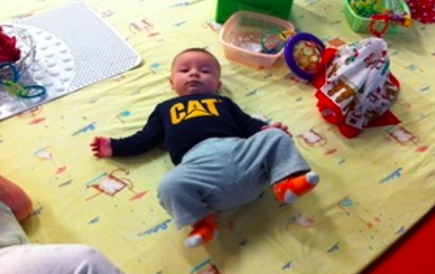
Newborns can be placed on their back in their crib or in a playpen. For babies who are turning to their side or more, create a clean, firm and safe space on the floor where you can lay them down — on the floor itself (which gives great traction) or on a blanket, rug or lambskin.
Always supporting their neck and head, lay baby down slowly with their bottom touching the ground first, then gently letting the back and eventually the head rest on the ground.
If they are able to move, they will easily get into their favorite position on their own from this starting point.
Why we do it:
On their backs, babies can see and hear better, breathe with more ease, don’t feel constrained or tense, and are in the place of the most stability and opportunity. They can also see YOU, their carer.
Even for babies who can roll over or sit, laying on the back is a starting or resting position, so it allows the baby to decide when and how they want to move next, a way we show respect for what they can already do.
On their back moving freely, you are giving your baby the chance to independently exercise their primitive reflexes, which may appear abrupt or jerky, but help baby make the adjustment from womb to world. These reflexes are the body’s way of keeping the baby safe and building up the body that they will eventually control.
Allows baby to build up the complex web of large and small muscles, bones, ligaments and fascia throughout the body that will enable later gross motor skills that are both efficient and graceful. Gross motor milestones — like crawling, sitting up, or walking — are achieved by the development of a many, many smaller movements — what we sometimes call “micro-milestones.” Nature has given your baby a perfect plan for movement development that we can trust will allow your baby to move with strength, efficiency and grace.
As the baby’s gross motor skills develop, the myelination of the nervous system is allowed to develop naturally and optimally.
We give the infant plenty of opportunity for free movement and uninterrupted play. Instead of trying to teach babies how to move, we appreciate and admire how babies are moving on their own at this point in time, knowing that the movements they self-initiate keep them safe and on track.
There is some research suggesting that when these reflexes are “retained” because the baby has not been allowed to move freely, it can lead to things like hypersensitivity, picky eating, poor muscle tone, or poor manual dexterity.
On their back, a baby can more easily see YOU, their parent or carer, so you can make face to face connections — a building block of their early emotional health. They can also discover their hands and begin to observe the world around them.
Ties to Principles:
Respect is the basis of the Educaring® Approach.
Basic trust in the infant to be an initiator, an explorer, and self-learner.
Freedom to explore and interact with other infants.
“Crying is your child’s language. It is her way of communicating her needs to her parents. Every average, healthy child cries.”
— Magda Gerber, Your Self Confident Baby
How to do it:
Let the baby know that you are there and you care.
We don’t always know what is making a baby cry exactly or often what to do about it. For many of this knowing what to do isn’t instinctual. It takes time, patience, observation, and practice.
We can begin with simply talking, quietly to the baby.
Acknowledge what you see and what you are feeling: “I see you are uncomfortable. And hearing you cry really upsets me. I want to find out what you need. Tell me. I will try to understand your cues and in time, you will learn to give them to me.” Madga Gerber, Dear Parent
Notice what you are feeling when your baby cries. Do you feel anxious, helpless, empathy, frustration, or even anger? Our reactions are important to examine and explore.
Try thinking out loud about the possible explanations, “Is your diaper wet? I don’t think you’re hungry because you just ate…” Magda Gerber, Dear Parent
Observe, notice, consider before reflexively feeding, changing, or picking up.
Why are they needing to cry? Rather than see your role as one who needs to stop the crying begin to see your role is to understand why they are crying.
“Respect, the child’s right to express his feelings, or moods.” ; “All babies cry. We would worry if they didn’t.” Magda Gerber, Dear Parent
Allow yourselves time to begin this life long relationship. Your baby will eventually come to anticipate and respond to your relaxed, calm response to their communication.
Why we do it:
Many babies cry a lot during the first weeks, and even the first three months, of life, as they adjust to a world that is totally new to them.
Crying is the baby’s mode of self-expression. It is the only way the baby can express feelings or discomfort. It is also a way to discharge energy.
Your responsiveness is the key factor in helping your baby feel secure. We MUST respond. It is HOW we respond that deserves more consideration.
We want to learn to read and then respond to the baby’s real need. Taking our time allows us to learn our baby’s different cries and what they mean.
Sometimes talking calmly and directly to the baby soothes the baby. If we observe carefully, we may see that simple acknowledgement, “You don’t seem comfortable…” and looking at your face is enough. No need for extra efforts or tricks to calm.
The way we respond also “conditions” the baby to expect specific responses (feeding, covering, rocking, patting). We are mindful about how we respond, making it a dialogue with the baby, so that we don’t create a need where one didn’t exist.
When you talk quietly to your crying baby, you begin a practice of lifelong, honest communication that will benefit both of you.
Ties to RIE Principles:
Trust in the infant’s competence
Sensitive observation of the child
A safe, challenging, predictable environment
Caregiving times: Involving the child
What parents and carers say:
“With Ethan’s colic, I followed every suggestion and piece of advice I received. Four months…of RIE classes provided us with a gentle, calm, relaxed alternative to the chaotic and frenetic “solutions” offered by well-meaning friends and relatives.” (Dear Parent, p.43)
Tal-Chen Rabinowitch, Pnina Klein, Gila Atira & Ruhama Ben-Eliezer (2020) Caregiver-versus mother-infant interactions in relation to cognitive, social and emotional measures at 11 years of age, Early Child Development and Care.
“Passive toys make for active infants and active toys make passive infants.” – Magda Gerber
How to Do It:
What kinds of toys for babies should we choose?
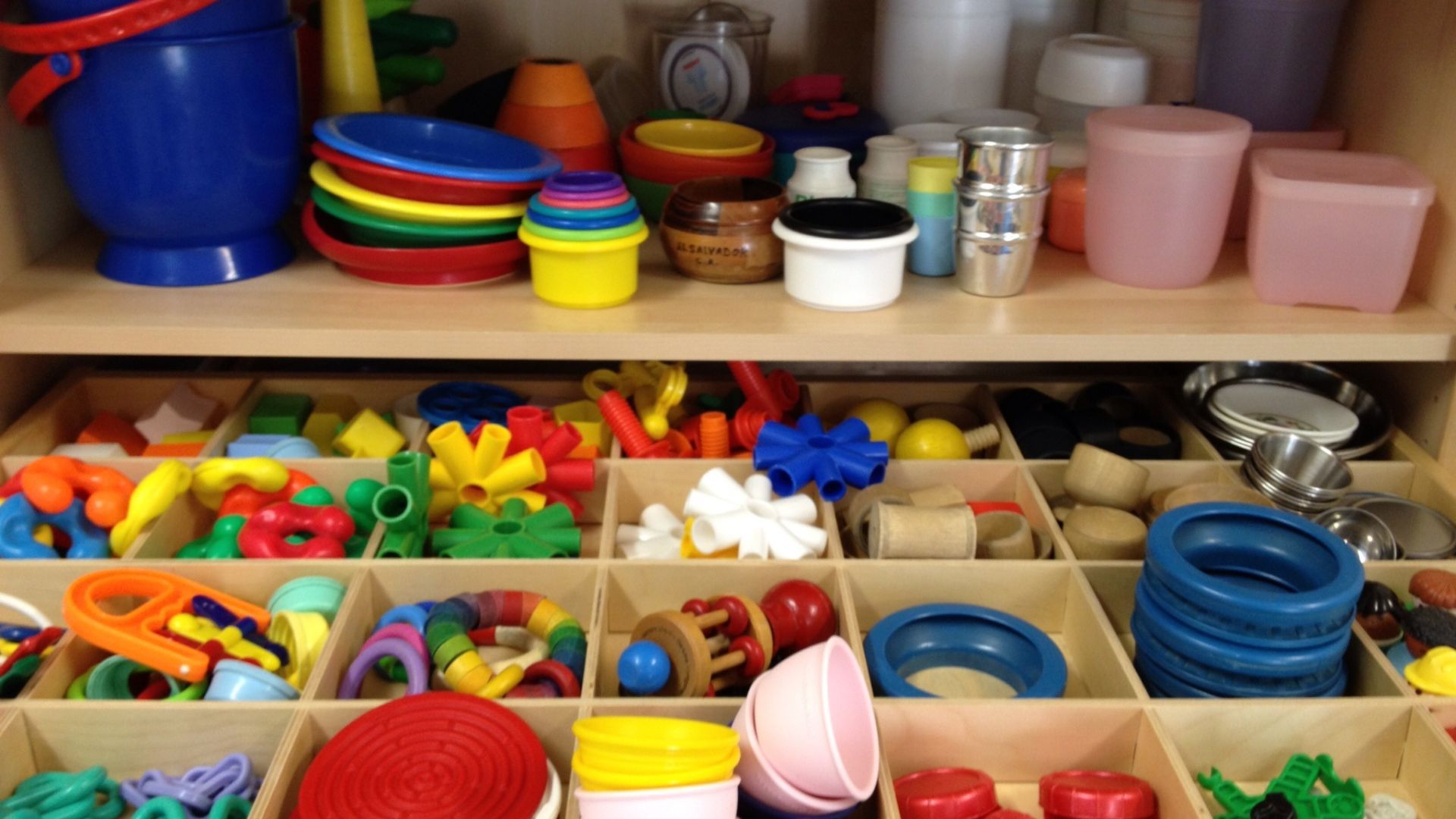
Open-ended: they allow the infant to decide how to use them. Toys that are replicas of items limit the ways children use them. Choosing items that are versatile allows infants to create for themselves. They use their own ingenuity in using the materials, which can support these new ideas.
Safe: cleanable, too large to swallow or lodge in the nose or ear, breathable if they can cover the nose and mouth.
Passive: they allow the infant to act upon them rather than do for the infant.
Some ideas of simple objects:
Wooden Rings
Sturdy cotton or linen fabric square
Plastic containers of all sorts with lids
Metal juice can lids
Metal canning rings
Balls in a variety of shapes and sizes
Plastic colanders
Why we do it:
Increases attention span
Supports open-ended play
Supports creative thinking
Supports independent play
Supports executive function development
When choosing play objects embody the mantra “less is more.” The less the object does the more the infant and toddler can do. The less the toy specifies how it is to be used the more ingenuity the infant is allowed to bring to the time spent with the object.
Limiting the number of play objects is also important. Choosing too many reduces a child’s ability to focus on any one item for long periods of time. An abundance of objects means the child spends more time deciding what to play with and less time exploring the object in its many facets, capabilities and uses.
Simple objects, especially for toddlers, may come from the kitchen or recycling. You need not spend a lot of money on toys for your baby to stimulate learning. Simple objects build your baby’s capacity for creativity and attention.
Ties to Principles:
Basic trust in the child to be an initiator, an explorer and self learner.
A safe, challenging, predictable environment.
Time for uninterrupted play and freedom to explore.
What parents and carers say:
“The irony is that the real educational toys are not the flashy gadgets and gizmos with big promises, but the staples that have built creative thinkers for decades.” — Alison Gopnik, PhD
Find meaning in the times we have to engage with our baby; the times when we “want something” because we have a task to complete with the baby. Caregiving times are often times when we want something — for example, changing a diaper, going to sleep, getting dressed, etc.
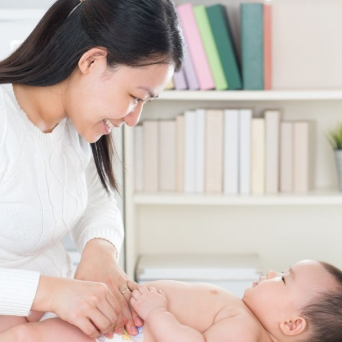
Tell the infant what you want to do: “I want to change your diaper.”
We are looking for ways to invite the infant’s cooperation.
Go slowly so the infant can follow along and participate as much as they can.
Toddlers can become playful during these times. It is helpful to acknowledge their playfulness while reminding them of the task at hand. If they continue to try to play, it is helpful to remain firm (not harsh). “It is time to put your clean diaper on. I am going to put it on now.”
Why we do it:
Infants learn self-control, self-discipline, and cooperation during “wants something” time.
Ties to Principles:
Trust in the infant’s competence
Sensitive observation of the child
A safe, challenging, predictable environment
Caregiving times: Involving the child
Consistency
References:
Gerber, M. (2002) Dear Parent: Caring for Infants with Respect (pp. 76-77)
Greenwald, D. and Weaver, J. (2013), Gerber, M. (1979) The RIE Manual for Parents and Professionals Expanded Edition Extended Edition (pp. 16-18)
“Quality time is what everyone really wants: a gift of time and attention.” — Magda Gerber
How to do it:
Carve out time when you can be fully present with your child. Your infant, toddler, or child will appreciate your ability to be fully present with them even if it’s just for 10 minutes. This is the true definition of quality time. This is much better than being half present for a longer period.
Set aside your devices. They take your attention away from baby.
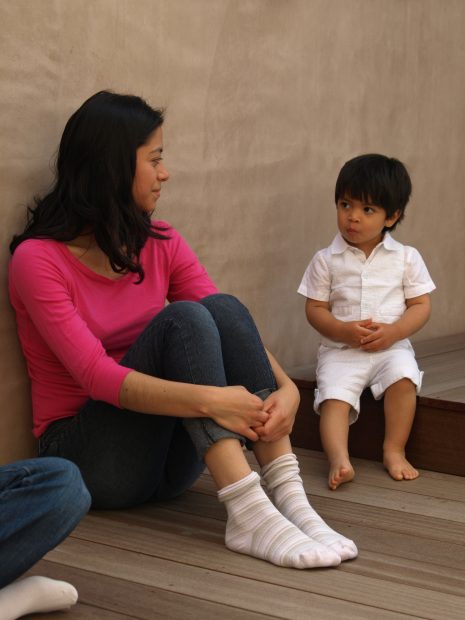
Seat yourself on the floor near your child in a space where they can safely explore. If you can’t sit on the floor, just get as low to the ground as they are so they can really feel your presence. Get comfortable. Have a good view of what they are doing.
Let go of any agendas for how you think your baby and you should spend this time. This is why we call this “wants nothing” time — because we don’t want anything from our baby. There is no expectation, no task to complete, etc.
If this is new for you, and you feel like it, you can say something like, “I just like being with you. I’m going to be sitting here enjoying watching you play.”
Let your child lead the interaction. How do they decide to use this time? Do they want to play? Do they want to sit on your lap? What’s important is that they choose how to use this time.
Observe them. What can you learn about them from what they are doing or the choices they make?
Think about how good it feels when someone you love gives you their full attention and appreciates you for who you are.
Participate when they show you they want you to get involved or ask you to. But still follow their lead.
Enjoy being fully present with your child.
When you are out of time, you can tell them in a straightforward way that it’s now time to do whatever comes next.
Try to schedule a time like this with your child on a regular basis.
Why we do it:
We learn so much about our children during these quiet moments of observation.
We all want to be seen and understood.
Children feel deeply connected to us after moments of full attention making it easier for them to be separated when you can’t be together.
It helps you understand how your child is developing.

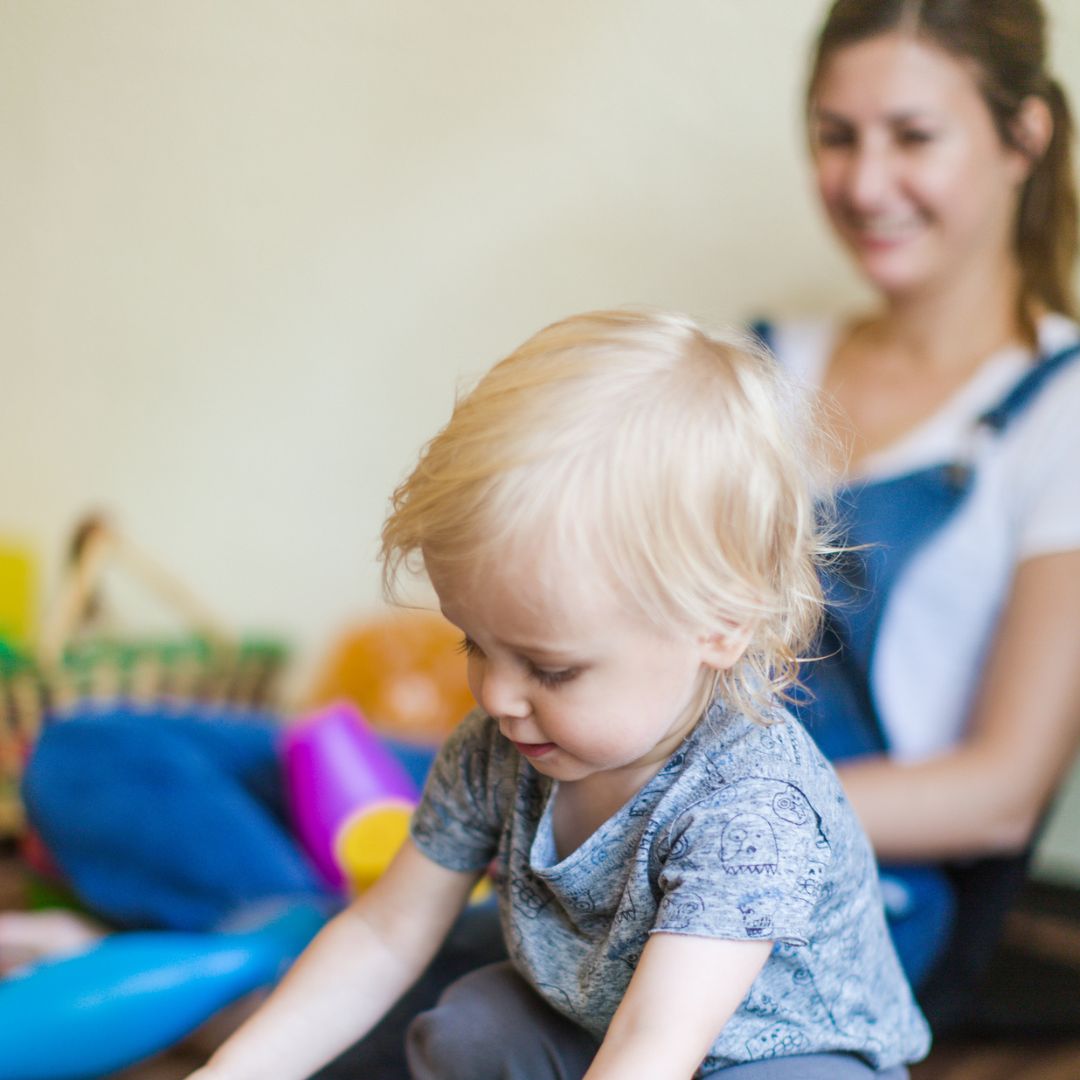
 Educaring® Principle: Creating the Environment
 Educaring® Principle: Time for Uninterrupted Play
 Educaring® Principle: Trusting the Child
 Educaring® Principle: Involvement in Caregiving
 Educaring® Principle: Consistency and Limits
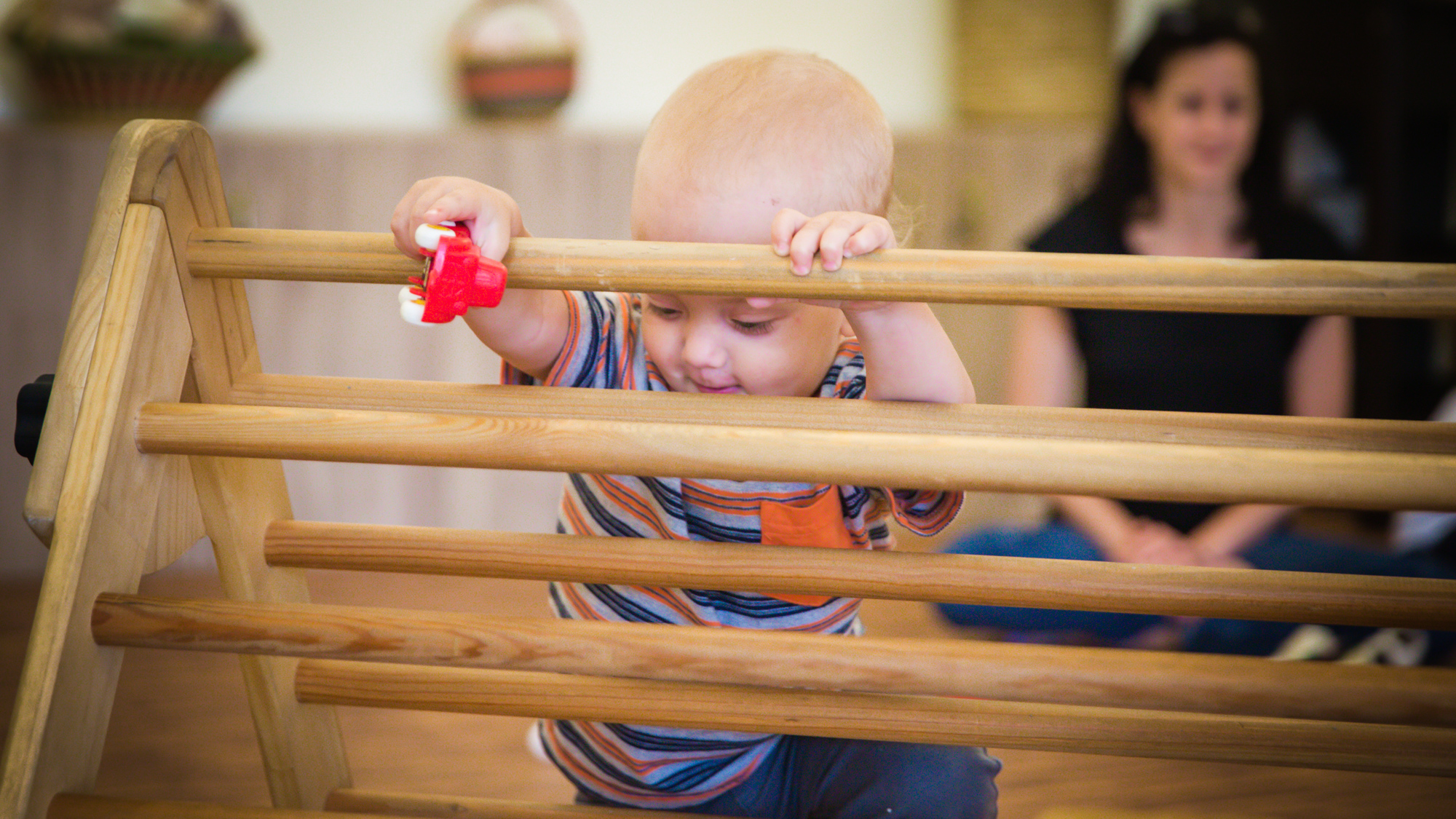
 Educaring® Principle: Freedom to Interact with Other Children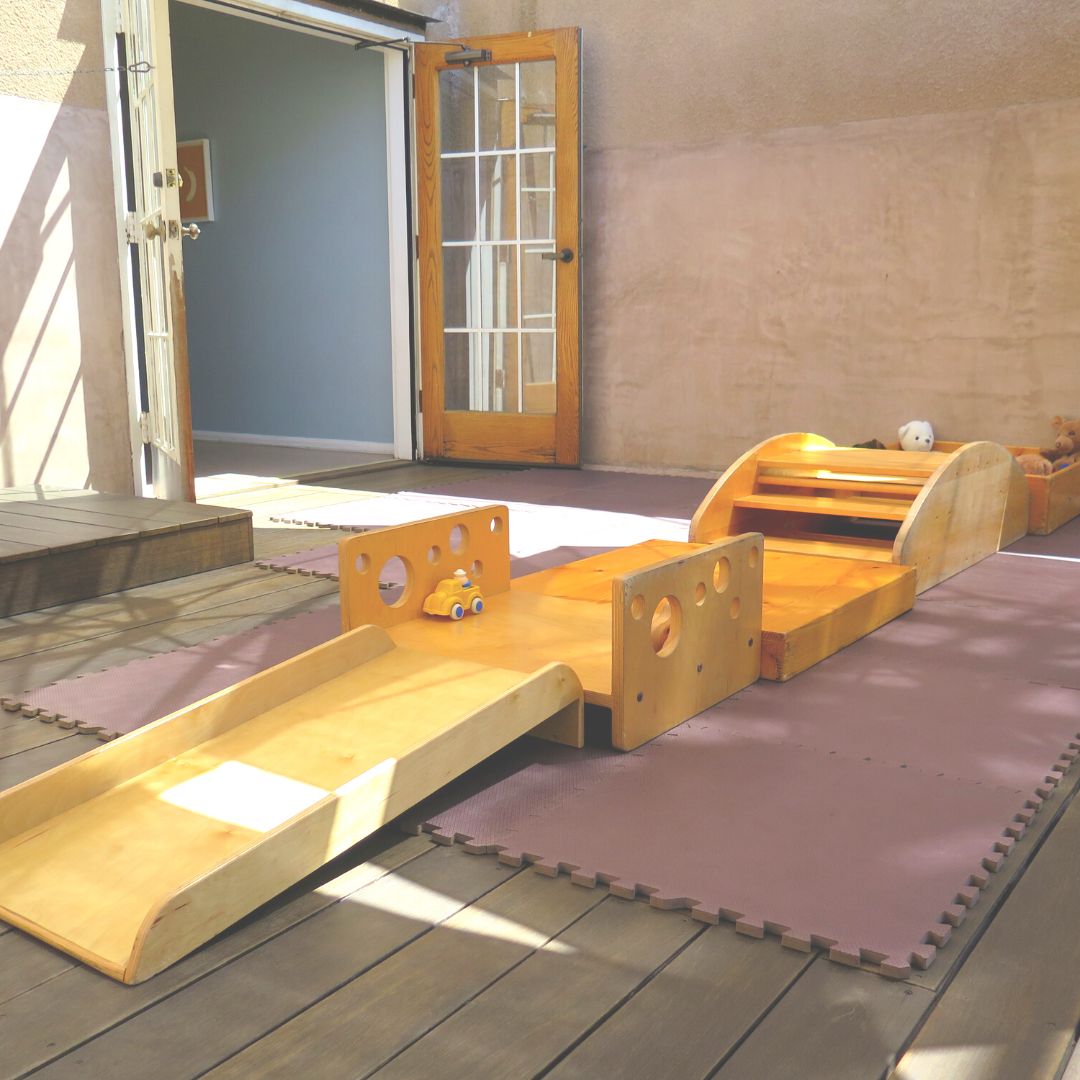


 Educaring® Principle: Sensitive Observation





 Educaring® Moment:



 Educaring® Practice: Wants Nothing Time
 Jean Piaget’s Way of Seeing and RIE®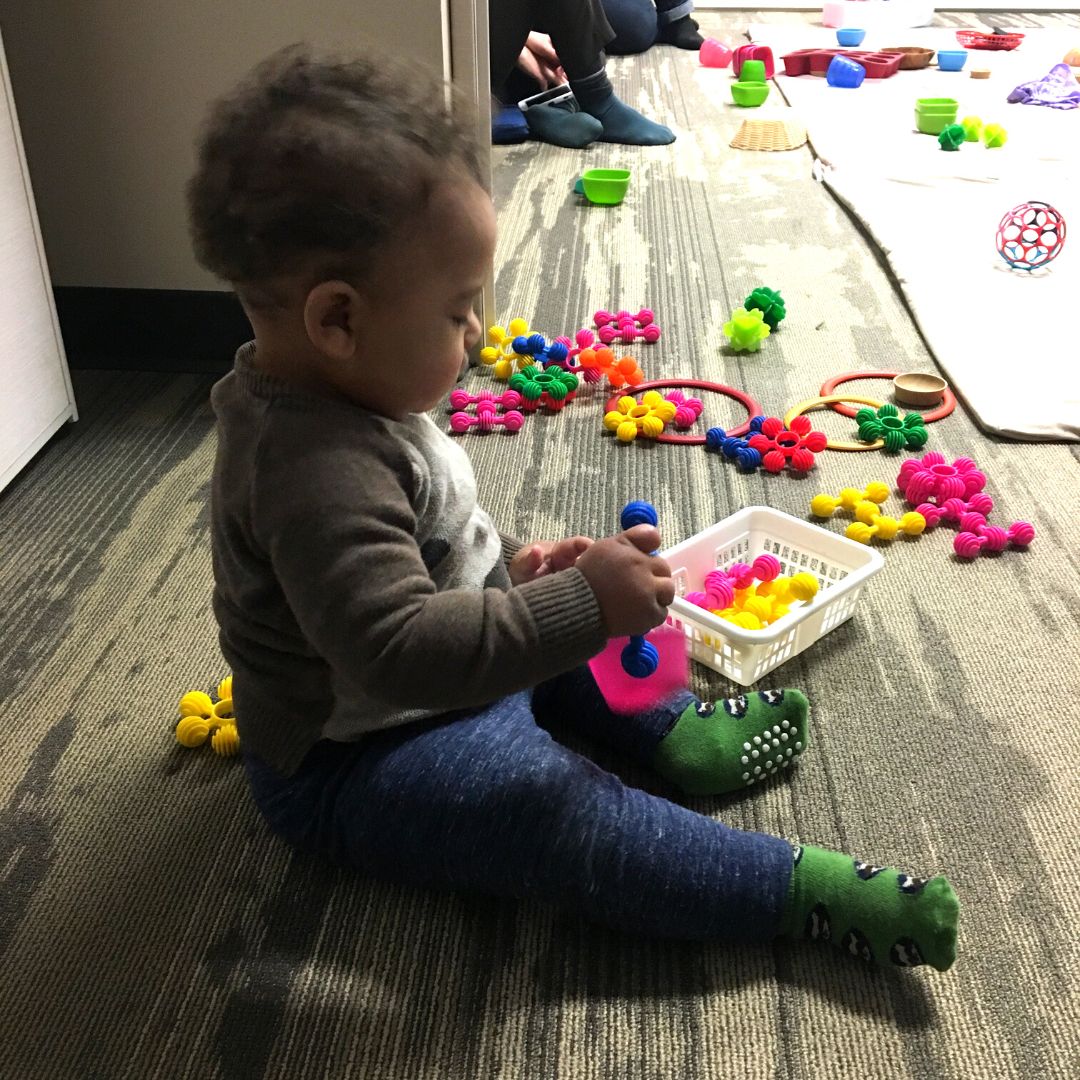



 Educaring® Practice: Choosing Play Objects
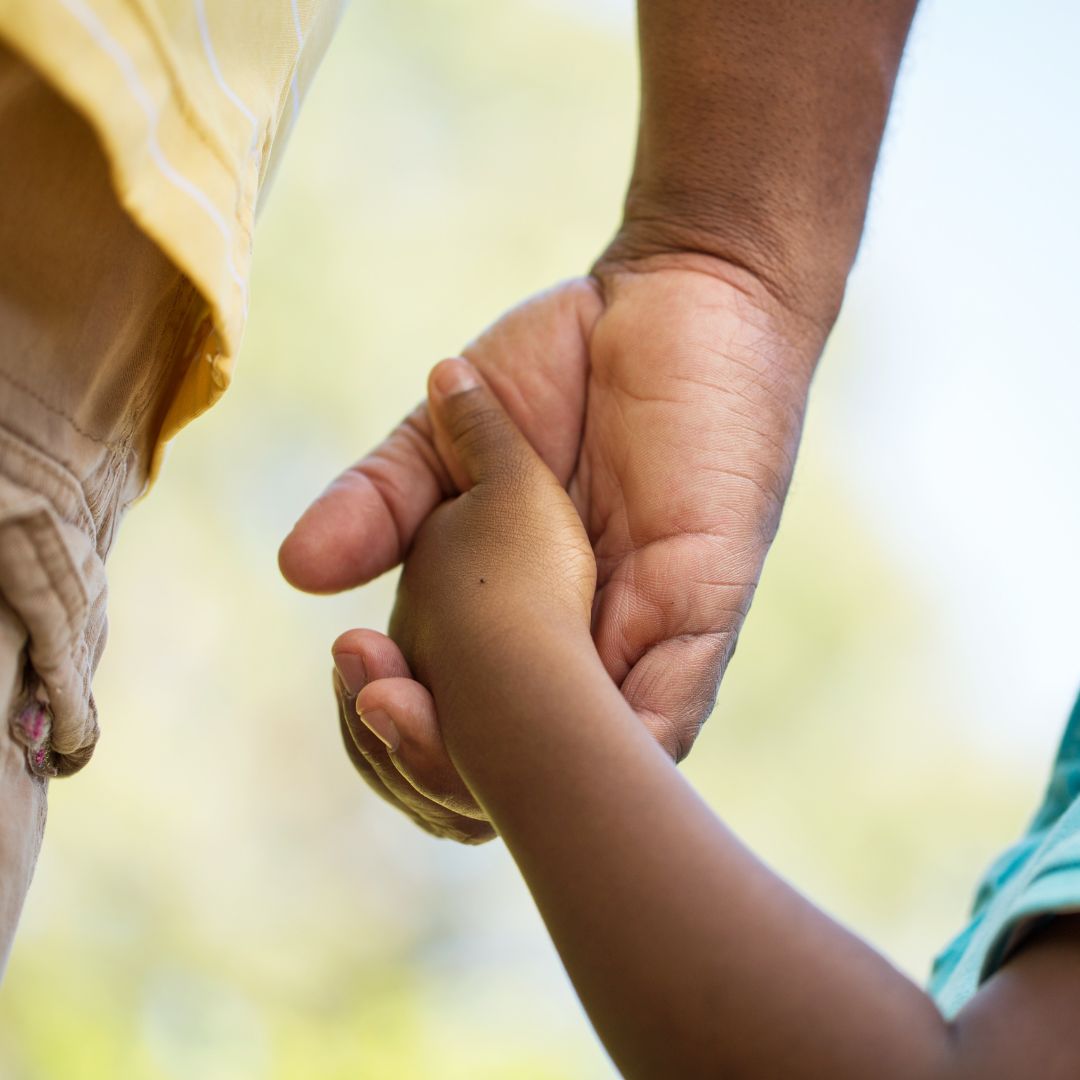
 Educaring® Practice: Responding to Crying
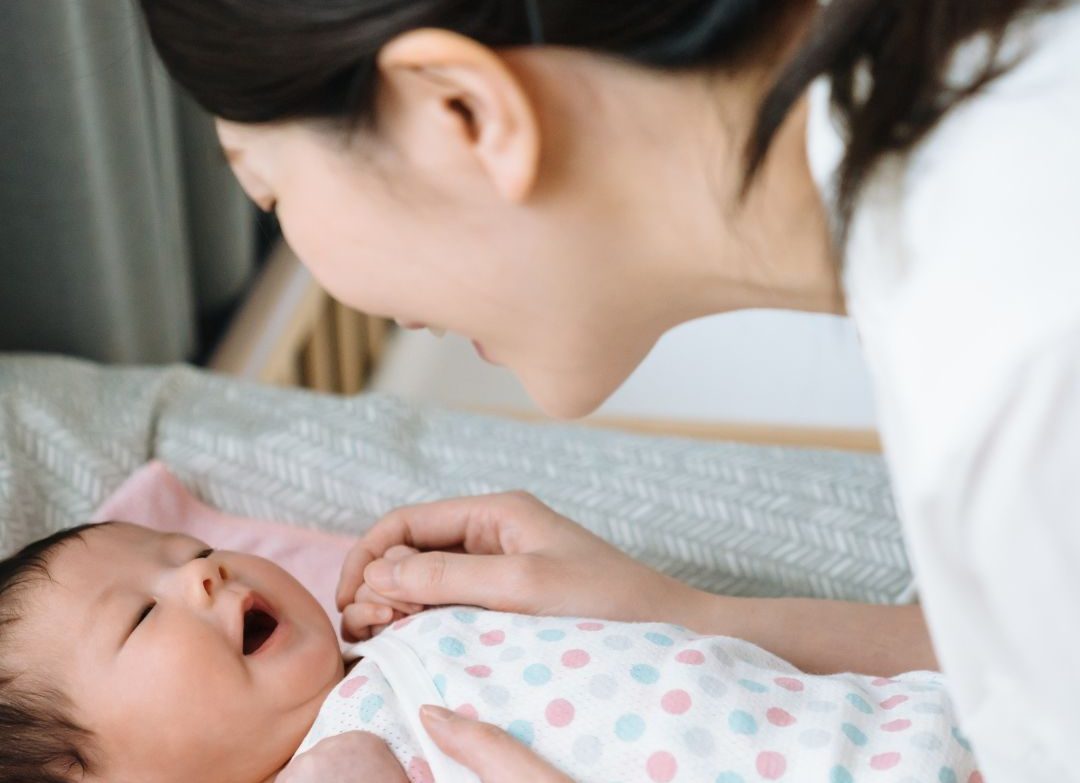 Educaring® Practice: Tell the Baby What You are Going to Do
 Educaring® Practice: Laying the Baby on Their Back
 Educaring® Practice: Wants Something Time