An environment for the child that is physically safe, cognitively challenging, and emotionally nurturing
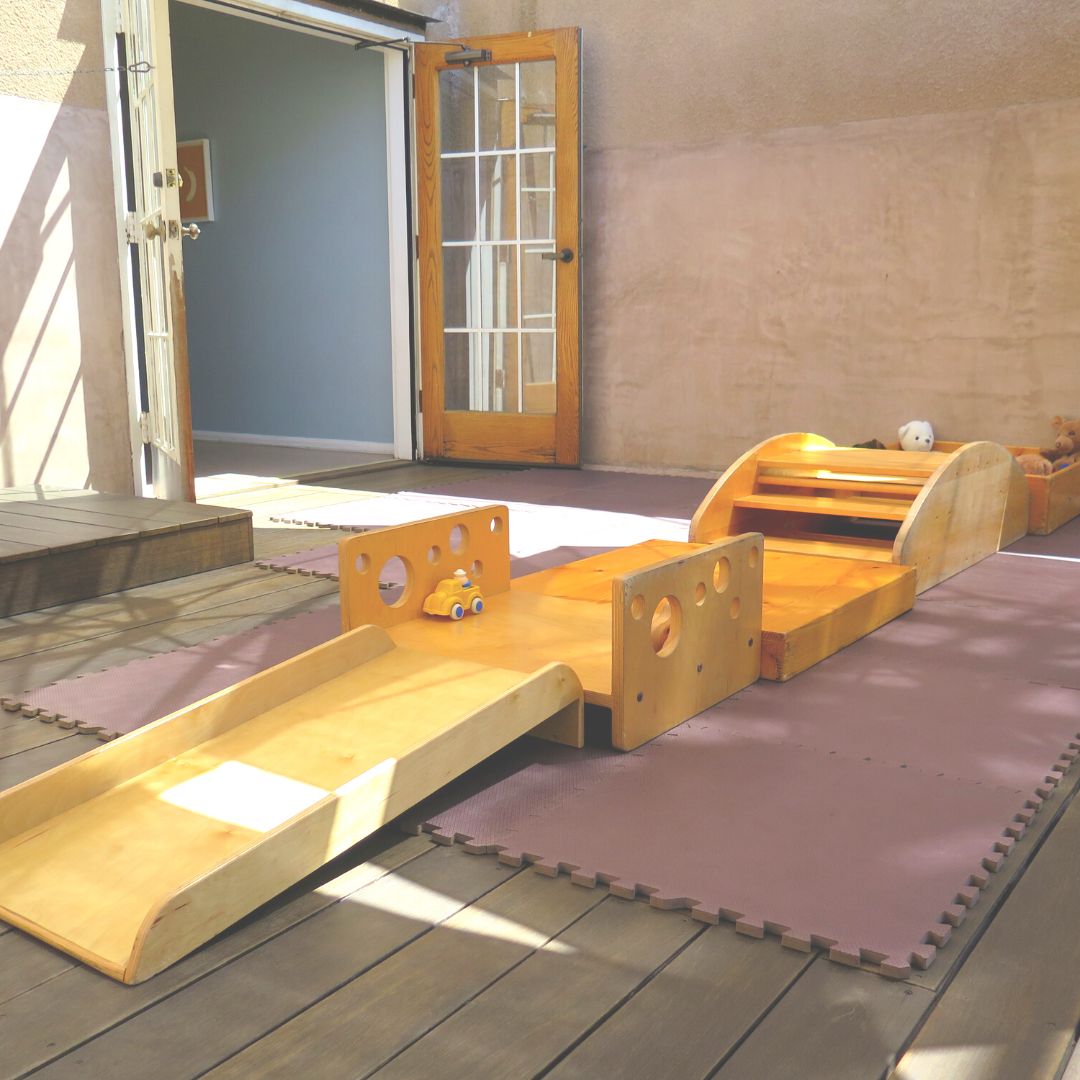
“Place is important for young children just like it is for adults. What we want to do is to try to create a cognitively challenging, physically safe and emotionally nurturing environment in which they can be the explorers, the small pioneers that they really are. Think about what explorers do, right? They scan the environment for what’s out there, what’s here for me, what can I do with it? They check for safety. Is it safe here? Is there danger around the corner? So children are testing their environment just the same way an explorer does when they’re out in the wilderness.
Usually the environments we see infants and toddlers in are manmade or human made environments, and everybody wants to provide children with the optimal learning environment, right? Parents want to provide that for their children. Oftentimes, the most guidance they get is from toy manufacturers, but there’s another way to do these things. And in RIE, we offer children a variety of actually quite simple everyday objects that they can explore in many different ways. We don’t want to offer them things that have only one kind of use or that have hidden mechanisms in them that are run by batteries. We take things from the kitchen. A small metal bowl will offer children many hours of play that they might not get from a busy box. A simple cloth napkin may give them the chance to learn peekaboo, and then later on, it can become a doll blanket or a washcloth or whatever they imagine it to be.
So it’s very simple. A big jug of water that has the lid glued on can give them so many opportunities to test their balance and figure out how do I keep standing up while I’m holding onto something really heavy? So it’s actually fun to explore your own house and figure out what things that children can safely play with. But thinking of the social environment, it’s really a fact that our attitude is what sets the tone of the environment for the child. What is it that the air has in it? What – is it the air of freedom? Or is it the air of – I better be careful. Somebody’s going to tell me no. I don’t know if I’m allowed to do this. So creating a space in which children feel an expansive sense of themselves and what’s possible is what we want to do.”
Ruth Anne Hammond, RIE Associate
 Educaring® Principle: Consistency and Limits
 Educaring® Principle: Creating the Environment
 Educaring® Principle: Freedom to Interact with Other Children
 Educaring® Principle: Involvement in Caregiving
Leave a Reply