
How do I help my child to sleep?
“Routine is a very important concept when you’re a young child because routine means predictability. And the more routine you have the easier children learn things. So by the time you put the child down, the child already expects to be put down.” — Magda Gerber
How to do it:
- Observe your child for signs of being tired.
- Create a routine around sleep so they can expect when to sleep.
- Try to minimize interventions that they will learn to expect from you to help them get to sleep – let them develop their own ways to fall asleep.
- Recognize different types of crying – very young babies will cry because it is the only way for them to communicate.
- Trust that the child will develop their own way to fall asleep.
- Use positive language to make the anticipation of rest and sleep a positive experience.
- Be patient – some babies will need 20 minutes or more to put themselves to sleep.
- Intervene when it is obvious to you that the child needs your presence. Sometimes just your voice and a gentle touch are enough.
Why we do it:
- It helps the child and you get the sleep you both need
Ties to Principles:
- Respect is the basis of the Educaring® Approach
- Trust in the infant’s competence
- Sensitive observation of the child
Video: See How They Sleep
In the (admittedly poor-quality but priceless) 20-minute video below, two parents, Jana and Lisa, talk about their experiences of helping their young children find their own way to sleep. Valorie Cole, the Director of an early childhood development center, discusses her learnings from RIE®, and how it helped transform their nap space into place where the children are ‘really comfortable.’ RIE’s founding director, Magda Gerber, shares her experience around sleep. A must-see for all parents of young children and the adults who care for them.
To learn more about RIE, click on one of the buttons below to find online or in-person classes from one of our highly trained RIE Associates.
Excerpts from the Video
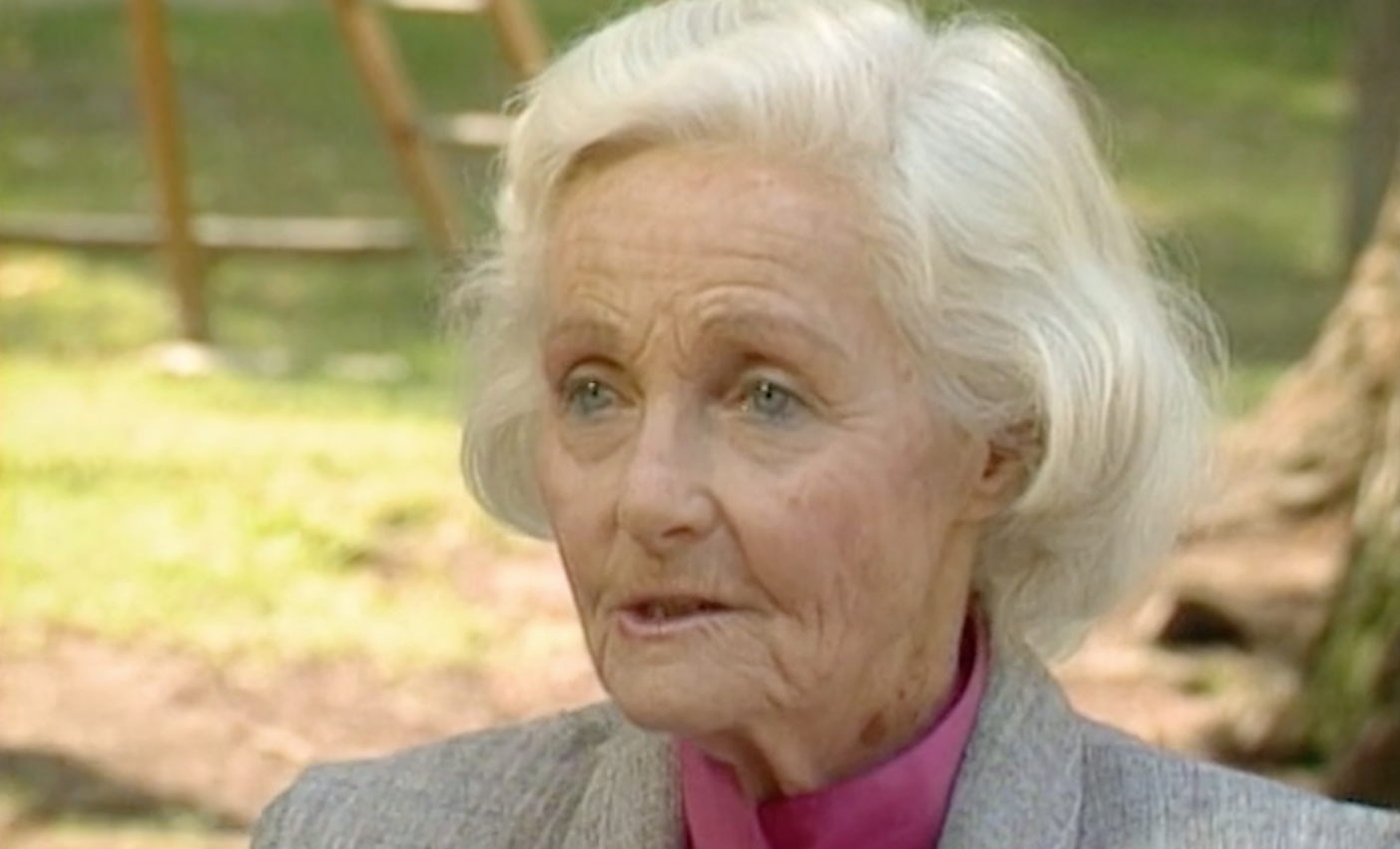
Magda Gerber, 2 mothers, an Educarer, a pediatrician, and the director of a child development center discuss sleep and how the Educaring approach helps young children find their own way to go to sleep.
Transcript
- Jana: Parent with 4 year-old daughter and 11 week-old son
- Valorie Cole: Director, Early Discoveries Child Development Center
- Brenda Hernandez: Educarer, St. James Child Development Center
- Jay Gordon: Pediatrician
- Lisa: Parent with 9 year-old daughter
- Magda Gerber: Founding Director, Resources in Infant Educarers (RIE)
Jana (Parent): I mean, sleep is crucial. I mean, it is. When she’s not well rested, she has accidents, she’s not able to cope.
Valorie (Director): When children don’t get enough sleep, they have a really hard time being able to engage with what’s happening in their day. Their appetite is lagging, their energy level is low, they can be cranky, or just kind of off.
Brenda (Educarer): They need to rest when they don’t take a nap they’re crying, you see they’re falling apart, they’re like, OMG they need to have a nap!
Jay (Pediatrician): Probably the biggest issue that parents bring into my office is ‘how do I get more sleep’ and I try to tell people that I don’t think that there’s an easy answer
Lisa (Parent): Her bed and sleep is not a comforting time for her. It’s not something she goes to readily. And I know she doesn’t get as much sleep as she needs to get.
Magda (RIE Founding Director): For all these many decades I have been working with parents. I would say there are two topics which are asked most of the time. One is cry is the other is sleep. And the two go of course together. If the child doesn’t sleep but cries then it’s a double problem. And it’s a very difficult subject matter because whoever is in charge of the child also has needs. At night, all of us have the need to sleep, and if a child doesn’t sleep, it doesn’t only mean the child doesn’t sleep but the child doesn’t let us sleep, then we are angry, then we are nervous, then we are upset about us being angry, and so it creates a …. mess.
Lisa (Parent): Starting around 7pm, there’s a tension that comes in the house, when is she going to go to bed, and how long is it going to take, is she going to get adequate sleep.
Jay (Pediatrician): I think that kids who sleep longer tend to have parents that sleep longer, and I think the whole day and the whole family runs better. That’s not easy to achieve.
Magda (RIE Founding Director): People think that there is a magic thing you do when you put the child down, either you rub backs or you give them a pacifier you put a bottle in their mouth will make them sleep. But never is it that easy. By the way, when the child understands more and more what we say, I usually tell mothers, don’t say you have to sleep. You say, it’s rest time, and I also like to tell ‘I need’ a lot – I need rest, and therefore now we have peaceful time. Because that you can reinforce. There’s no way you can reinforce sleeping.
Valorie (Director): When I began to study RIE about 10 years ago, I began to see nap time and sleep in a different way. I felt that nap time was something that the adults were doing to the children. I could see that we were really forcing the issue, deciding when nap needs to start, rocking, walking around with the child, those sorts of things.
Jana (Parent): I couldn’t make her go to sleep. You can’t make another person sleep. And even when I go to sleep, I’m going to realize sometimes I’m really tired and fall asleep right away, and sometimes I need time to sort of clear my head and get in that relaxed mode to let sleep come.
Self-Soothing
Magda (RIE Founding Director): You know all of us no matter what age, have to develop a way of falling asleep. And some people just the way the minute they hit their bed, they are asleep, and some people have to struggle and wiggle and toss and turn but we all develop something that puts us to sleep. And ideally, the less the parent or the adult tries to do, the easier the child learns to fall asleep.
Lisa (Parent): I used to nurse her to sleep, lay her down in the bed, and hope she wouldn’t wake up. I would drive her around the city for naps, and take her gently out of her car seat, and lay her down and try not to wake her up, she would have to stroke my arm until she fell asleep. She would have to have me right next to her. She never learned how to relax on her own and let herself go.
Valorie (Director): You need to trust them they’re able to soothe them selves to sleep, and they’re able to develop those ways to comfort and quiet and still their bodies to sleep
Nursing and Waking
Jay (Pediatrician): I think that kids will probably learn to sleep by themselves if you pat them instead of nursing them every time.
Magda (RIE Founding Director): usually let’s take either a breast fed baby or a bottle fed baby and as the baby gets enough sucks enough they usually fall asleep. They get satiated fall asleep. And all grownups are very happy when that happens and kind of sneak the baby into the crib you know, just don’t wake up and they can they would try hardly to move and to do it so they baby wouldn’t wake up. And that works well for quite a while when the baby is very young. Lo and behold, as the baby gets older, more aware of their own environment, and then, you know, you kind of sneak them into their bed, a few minutes later they wake up.
Jana (Parent): My daughter was pretty much was nursed to sleep. She would fall asleep nursing and I would lay her down and she would stay asleep and what happened is as she got older, those tricks stopped working she would wake up! And didn’t know how to soothe herself back to sleep.
Valorie (Director): It’s part of RIE’s philosophy of respecting the child and trusting that the child can do it and the children really can do it. And I think they sleep better, and I don’t think there’s waking to wonder where’s that person who was rubbing my back, or, where’s that person who was rocking, why aren’t I rocking, those sorts of questions.
Observation
Valorie (Director): when a child joins the group, that teacher’s part of her day is to observe the child and to see what the signs of that’s child sleepiness are. Some children ask for naps, or ask for sleep, some children ask for the comfort item.
Jana (Parent): I’ve really worked in the first 6 weeks of really observing him, and observing his patterns, and noticing what happens and what he does before he would start to fall off to go to sleep, and, usually with August there’s a calmness that comes first where he’s kind of off in his own little space almost and, kind of gets caught up in, of him kind of him watching his hand he’s laying down or even in my arms or something and if I catch that at that window and lay him down, he usually just goes down without any crying, I mean there’s a little kind of letting go right before he closes his eyes.
Routine and Expectation
Magda (RIE Founding Director): Routine is a very important concept when you’re a young child because routine means predictability. And the more routine you have the easier children learn things. So by the time you put the child down, the child already expects to be put down.
Jana (Parent): I was able to observe his sleeping patterns enough that we started a bedtime routine, and that at the same time every night, start his bedtime routine, and that that he gets laid down at the same time every night and he knows that ok we start this and that ultimately he’s going to be laid down and its sleeping time and I can really see in him now that um the recognition of that and that he looks forward to that, and is excited to be laid down on his crib.
Magda (RIE Founding Director): I didn’t know why I always, but really always, was successful at putting children to sleep. And it was because I genuinely told them ‘boy, are you lucky you can go to bed – I still have to do dishes (or god knows what). I wish I could go to bed.’ And that was true! I didn’t make that up – so the child went to bed because that’s a desirable thing. And many times I tell parents, try to listen to yourself when you say something. If you make something a desirable or do you (in a grumpy voice) ‘sorry but eventually you’ll have to go to bed.’ Many, many times children are too tired, and then of course they cannot go to bed.
Deryn
Valorie (Director): In the naproom today, Deryn was having a hard time settling into sleep. She needed to have some things before she was ready to be on her mat. And Sarah listened to her, and kept reminding her to come and finally realized what it was, and Deryn went to get it and came back. And um Sarah just gently spoke with her about ‘it’s time to rest, it’s time to stay on your mat, it’s time to rest your body’, those sorts of words. And Deryn sat, and lay, and sat, and stood, again just patiently just reminding her that it’s really time, that this is the time to rest. And eventually, Deryn flops down, and she’s one of our children who really needs a lot of movement and you can see she’s doing a lot of thinking, maybe processing her morning, maybe thinking about something else, I’m not sure. But just respecting that, with gentle reminders that what the parameters are that this is nap time and you need to stay on your mat. Generally she’ll fall asleep in about 20 minutes.
Crying
Jana (Parent): It was hard to hear her cry at all. It was hard for me to listen to, and I felt that if I wasn’t in there, and picking her up, and holding her, and trying to fix it for her, then I wasn’t a good parent, or doing my job as a parent. I realized with August that, he’s an infant and so the only way he has to express himself are little sounds and crying. A little bit of crying and little crying noises and that that’s ok. And I think having the benefit the second time around, I’ve had 4 1/2 years of experience with my daughter, and I’ve learned that that crying isn’t that they’re in distress or in great need of something. I know the difference of a cry when they really need you and they need something vs. they’re trying to work something out.
(August going to sleep in his crib, quietly crying)
Intervention
Jay (Pediatrician): RIE’s attitude about selective intervention, day and night, playing or sleeping, is a lot closer to what I believe than any books that are out there right now. Again, most of the books that are out there right now don’t advocate selective intervention. They advocate NO intervention – let him cry and look in on him – I don’t like that. I think like I said, most parents who know their kids well can figure out when the child needs to be picked up, and when they don’t need to be picked up.
Jana (Parent): I go in and try to take a few moments to soothe him and sometimes it might involve actually picking him up and holding him to help him settle a little before I lay him back down. Sometimes just my presence of being there and my voice is enough and he’ll hear it and he’ll be a little sigh and he’ll be able to find that place to be able to let go.
(Kendall crying in crib, being quiet, crying a little more, being quiet again, looking at her hands – other babies crying in the room while she is being quiet – closing her eyes, moving her head)
Valorie (Director): And I just feel that it’s really, there’s really, really a difference in nap rooms since I’ve been studying RIE than before. And I know it’s true because I hear it from parents, and I hear it from teachers who are studying with us and I hear it from new staff that ‘wow, there’s really a difference here – these children are really comfortable.’
Credits:
- Post-production facilities courtesy of Los Angeles Media Education Center and Wayde Faust
- Footage of Magda Gerber courtesy of Santa Monica City Television; Ida Unger, Producer
- Title Music and Audio Mixing by Larry Dean Embry
- Produced by Eileen O’Sullivan and Lance Richter
Leave a Reply