
If you are inspired by the Educaring® Approach, interested in growing your understanding of this model of infant and toddler care, and open to how it might transform you as a human being, we invite you to consider applying to our professional development training.
Upon completion of our multi-year program, you will join a thriving community of respected and professional RIE Associates offering worldwide classes, consulting, and coaching. RIE Associates are experts in the Educaring Approach. Associates help parents and childcare providers transform their approach to infant care and give the next generation of babies a strong foundation for life. We guide them to see infants with new eyes and in so doing, change their lives as well.
RIE-Certified courses such as RIE Parent-Infant Guidance™ classes, RIE Before Baby™, RIE Nurturing Nanny™, RIE Cuidadoras Cariñosas™, and the RIE Foundations: Theory and Observation™ Course, can only be taught by a qualified licensed RIE Associate.
The RIE Professional Development Pathways
RIE has developed a unique, goal-focused, mentorship-based Pathways program to meet the needs of students who seek to deepen their practice of Magda Gerber’s Educaring Approach and to share it with others professionally. There are three stages to becoming a RIE Associate:

RIE Foundations: Theory and Observation™
If your goal is to use the Educaring Approach to care for children and educate adults, the RIE Foundations: Theory and Observation Course is the place to start, regardless of your prior experience or future goals and intentions. Whether you are a caregiver or a parent, you will increase your understanding of infant and toddler development, gain practical caregiving skills, and see the world “with new eyes.”
RIE Practicum™
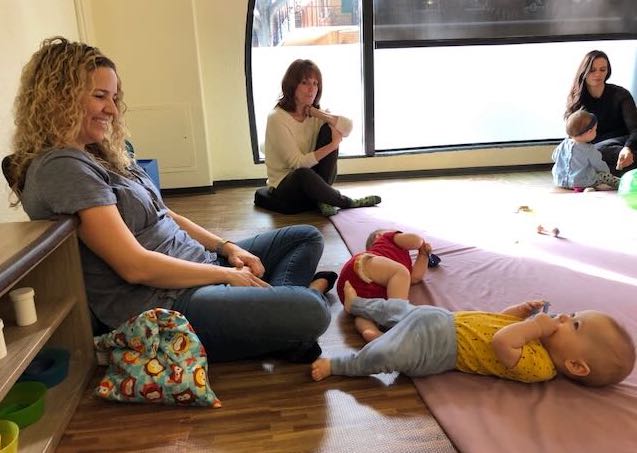
If you are interested in becoming a RIE Associate, the next step following Foundations Course completion, is to apply for the RIE Practicum. In the Practicum, you will put your knowledge and understanding of the Educaring Approach into practice by modeling the Approach with infants and interacting respectfully with parents and other adults, with the support of a RIE Mentor. See more details and the requirements for the Practicum below, including the application.

RIE Internship
Students who complete the RIE Practicum may apply for the RIE Internship. The Internship will give you practice in educating adults about Magda Gerber’s Educaring Approach and prepare you to professionally teach RIE Certified Courses. See more details and the requirements for Internship below, including the application.
Students who complete the Practicum and the Internship are considered RIE Graduates and are invited to join the Alliance of RIE Associates, paying an annual fee after the first year of membership. There are RIE Associates all over the world who meet regularly to discuss the practice, receive further training, and support each other. Only RIE Associates may teach RIE Certified Courses such as RIE Parent-Infant Guidance Classes, RIE Nurturing Nanny, RIE Cuidadoras Cariñosas, RIE Before Baby, and Introduction to Educaring. Additional qualifications and an additional mentorship process is required to teach the RIE Foundations: Theory and Observation Course.
RIE Practicum™
After completing the RIE Foundations: Theory and Observation™ Course, if you want to further develop your practice with children and families, or go on to lead RIE Certified Courses by becoming a RIE Associate, the next step is to apply for the RIE Practicum. In the Practicum, you will receive individual mentoring while gaining hands-on experience applying the RIE principles with young children and families, as well as participate in a Cohort Group with additional guidance from a RIE Cohort Mentor. The goal is for you to put your knowledge and understanding of the Educaring Approach into practice by modeling the respectful approach with infants and interacting respectfully with parents and other adults.
Individual Student Practicum
The Individual Practicum consists of 80 hours and is intended to be completed within a year. Practicum can be completed in one of three possible models:
- RIE Parent-Infant Guidance Class Practicum: Led in-person by a RIE Associate who will serve as your Individual Practicum Mentor. This is the preferred model for students who can access these classes.
- Distance Parent-Infant Class Practicum: This model is considered for students who cannot access an in-person Certified RIE Parent-Infant Guidance Class but can create an in-person class of their own, modeled after a certified class. You will record your weekly classes (with permission from the families) and review the recordings with your Distance Practicum Mentor for reflection, guidance and supervision.
- Group Care Practicum: This model is for students working in a group care setting such as a child care center. This model will consist of live observation of your usual work setting by the Mentor Teacher during one hour weekly meetings as you function during normal care routines, including follow-up meetings with your RIE Mentor for reflective supervision discussion. A Group Care Practicum may also be conducted via a Distance Model. In a Distance Model, you will record your practice in the group care setting (with written permission from staff and families) and regularly review weekly recordings with your Group Care Practicum Mentor for reflection and guidance.
Practicum Cohort Groups
As a Practicum student, you will also participate in twelve monthly, two-hour video conference meetings led by a Practicum Cohort Mentor. Your Cohort Group will provide the opportunity for you to build relationships with RIE peers, ask questions, share ideas related to your experiences in your Individual Practicum, and explore resources to deepen your practice, with the guidance of your Cohort Mentor.
RIE Practicum Tuition
The tuition for the Practicum is $1,800 and is broken into two payments of $900. The first payment is due within two weeks of acceptance into the Practicum and the second payment will be due at the midpoint of the Practicum, upon 40 hours of completion.
Applying to the RIE Practicum
Students who have successfully completed RIE Foundations within the last five years are eligible to apply to the Pathways and be considered for Practicum assignment. Accepted applicants can expect potential placement during the following month of July. Opportunities for placement in the Practicum are limited; students may need to repeat applying before securing a mentorship assignment.
The application process requires the following:
- A $100 application fee.
- A resume or CV
- Documentation from your RIE Foundations course, including:
- Your Final Self-Evaluation
- Your RIE Foundations Instructor’s Evaluation letter
- The application includes a series of questions about your experience in the field of child development, your interest in RIE, and your thoughts about how you might contribute to the organization or share the Educaring Approach with others.
- Optional: Documentation of formal education credits in early childhood development, including community college courses or equivalences. Submitting documentation of these credits is optional for the Practicum, but a minimum of 6 credits will be required for application to the Internship. At least three of those credits should be specific to infants and toddlers. Suggested courses include:
- Infant and Toddler Development
- Child, Family, and Community
- Teaching in Children in a Diverse Society
- Observing and Recording Children’s Behavior
Once all practicum application packets have been reviewed and discussed, the semi-finalists for the practicum will be contacted and asked to participate in an interview process. This will be done by a panel of RIE Associates where they will ask each applicant a set of standard questions. Once all interviews have been conducted and the finalists selected, the Pathways Coordinator will inform each selected applicant of their acceptance into the RIE Practicum program and review options for practicum placement.
Applications for the 2025 Cohort are now closed. Thank you to those who have applied. We look forward to opening for applications again in 2026.
RIE Internship
Students who complete the Practicum may apply for a RIE Internship. As a RIE Intern®, you will receive mentorship as a student teacher during RIE Foundations: Theory and Observation™ Courses and as a member of a Cohort Group. You will have opportunities to practice sharing the Educaring Approach with others as you further internalize the Approach. By the end of the Internship, you will be able to explain RIE’s 7 Basic Principles, be familiar with all the RIE Certified Courses, and be ready to join the Alliance of RIE Associates. See more details and the requirements for Internship below, including the required application.
Internships in RIE Foundations: Theory and Observation™ Courses
During the RIE Internship, you will participate in three or more RIE Foundations: Theory and Observation™ Courses under the guidance of at least two different RIE Intern Mentors. Internships may be done during in-person or online RIE Foundations: Theory and Observation™ Courses. Interning in at least one in-person RIE Foundations: Theory and Observation™ Course is highly encouraged but not required at this time. The three iterations can be completed within one to two years, depending on availability of courses.
RIE Internship Cohort Groups
As an Intern, you will participate in twelve monthly, two-hour video conference meetings led by an Intern Cohort Mentor to facilitate peer-to-peer learning and other experiences to prepare you as a prospective RIE Associate. In this forum, you will build relationships with RIE peers and explore Certified RIE Courses with your Mentor Teacher, such as Nurturing Nanny/Cuidadoras Cariñosas, and Before Baby. You will offer a non-certified 3-Hour Introduction to Educaring course to your community, and reflect on that experience with your Cohort Group. You will also be required to complete a project that will benefit the RIE organization such as writing an article or hosting a webinar in partnership with an Associate.
RIE Internship Tuition
The tuition for the Intern Program is $1,700 and is paid in three installments, each due two weeks before the first day of each of the three RIE Foundations: Theory and Observation™ Courses you participate in as an Intern: $650, $650 and $400.
Applying to the RIE Internship
Students who have successfully completed the RIE Practicum may apply to become a RIE Intern. To apply to the Internship, you will need:
- Documentation from your RIE Practicum, including:
- Your Final Practicum Self-Evaluation
- Your Individual Practicum Mentor’s Final Evaluation
- Your Practicum Letter of Completion
- The application includes a series of questions about your experience in child development, your interest in RIE, and your thoughts about how you might contribute to the organization and share the Educaring Approach with others.
- Documentation of a minimum of 6 credits in early childhood development, including community college courses or equivalences. While optional for the Practicum application, these credits are required for the application to Internship. At least three of the credits should be specific to infants and toddlers. Suggested courses include:
- Infant and Toddler Development
- Child, Family, and Community
- Teaching Children in a Diverse Society
- Developmental Psychology: The Child
Once all intern application packets have been reviewed and discussed, the students will be contacted for interviews. This will be done by a panel of RIE Associates where they will ask each applicant a set of standard questions. Once all interviews have been conducted and the finalist selected, the Pathways Coordinator will inform each selected applicant of their acceptance into the RIE Internship program and review options for placement.
FAQs About the RIE Pathways Program
Practicum Duration: Practicum Cohort Groups meet for 12 months.The 80 hours of Individual Practicum are also intended to be completed within a year. If circumstances prevent completion within a year, the total 80 hours must be completed within two years.
At the end of these 80 hours, if either the student or one of the student’s Mentors (the Practicum Mentor or the Cohort Mentor) feels the student is not ready to complete the Practicum, they may apply for an extension of up to 20 additional hours of Individual Practicum.
Internship Duration: Internship Cohort Groups meet for twelve months. Interns also participate in RIE Foundations: Theory and Observation™ Courses under the guidance of an Intern Mentor Teacher three (3) times, with at least two different Intern Mentor Teachers. Depending on the availability of RIE Foundations: Theory and Observation™ Courses, this may take one to two years.
Applications are accepted during specific application periods, with the frequency determined by the RIE office but no less than once per year. All accepted Practicum students will be placed by the end of the enrollment period, so that students may begin their Cohorts together at the beginning of the year. For example, students that apply in a September application period will be informed in December of their placement, and will begin their Practicum in January.
While individual Mentors may be able to communicate with you in other languages, a large portion of the Pathways will take place in English, so oral and written English fluency is required. We strongly encourage bilingual speakers to apply to the Pathways so RIE can expand its ability to teach Magda Gerber’s Educaring Approach in other languages.
If there is a RIE Associate teaching RIE Certified Parent-Infant Guidance Classes in your local area, this is your best option for being placed with a Practicum Mentor. If this is not possible, you can participate in a Distance Practicum. Distance Practicums can be either a Parent-Infant Class Model, where you will start your own parent-infant classes under the guidance of a Mentor, or a Group Care Model, which can be conducted within a childcare setting where you work. In both models, you will be asked to record your practice, review the recordings with your RIE Mentor Teacher, and engage in reflective discussion via video conference calls.
A leave of absence from either the Practicum or the Internship program can be granted for up to one year with approval from the Professional Development Committee. Students currently in the Pathway can apply for a leave of absence HERE.